In a report covered on November 17, 2026, Grayscale Head of Research Zach Pandl called lower crypto prices “compelling entry points” for medium- and longer-term investors. His assessment followed a sharp early-November decline: The Block’s data showed Bitcoin down about 13% over the preceding week and 20.8% over 30 days, with its headline placing Bitcoin at $64,000. The GMCI Index of 30 large cryptocurrencies fell 13.8% over seven days.
Pandl attributed the decline partly to stablecoin outflows into fiat after what he described as a major security incident at Binance in late October. He also pointed to weakness spilling over from AI-related equities as portfolios exposed to both technology stocks and crypto reduced risk. In Grayscale’s view, a weaker outlook for AI investment could affect Bitcoin infrastructure providers as well as Bitcoin.
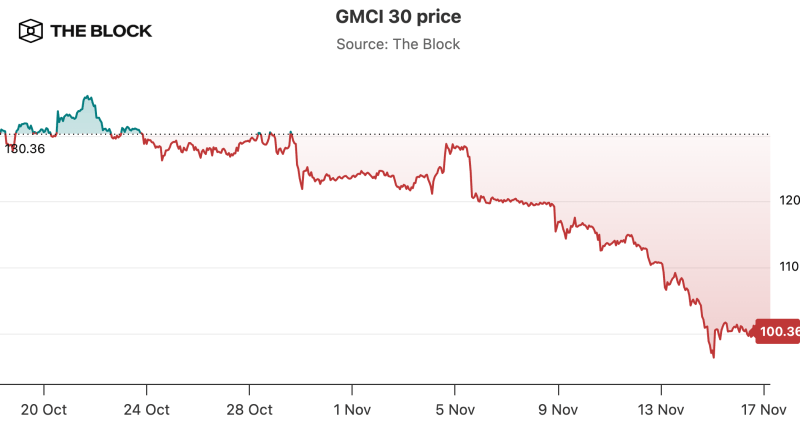
Technical factors may have intensified the fall, Pandl said. Bitcoin moved below its 200-day moving average on November 12—a level some trend-following funds use as a sell signal—and leveraged perpetual-futures positions were liquidated. Grayscale said outflows from crypto exchange-traded products did not appear extreme.
The monetary case in Pandl’s argument was that continued deficit spending creates demand for alternative stores of value. That is Grayscale’s interpretation, not evidence that Bitcoin reliably preserves purchasing power. Pandl also cited institutional adoption of stablecoins and tokenized assets as signs of broader crypto demand, while acknowledging high inflation, possible further Federal Reserve rate hikes, geopolitical conflict and uncertainty around AI investment as risks. Grayscale said the pullback did not appear closely tied to a planned Anthropic IPO or pressures on Strategy.