In reporting published on November 19, 2026 (UTC+8), Bitcoin was trading around $62,500 after touching a four-month low of about $61,000 on November 15. CryptoQuant said the decline had erased gains from a rally that began on August 19. The firm described Bitcoin as both back in a bearish phase and in a “value zone”—two labels that measure different things, not a prediction that the decline is over.
Why CryptoQuant called the market bearish
Bitcoin had fallen below its 200-day and 365-day moving averages, then at $72,900 and $75,900, respectively. CryptoQuant research head Julio Moreno said those former support levels had become resistance and argued that a large rally would be difficult to sustain without crossing back above them.
The firm said its measure of total Bitcoin demand growth, including spot and perpetual futures, had fallen below −400,000 BTC on a 30-day basis—the weakest reading since the start of July. Moreno said a durable recovery would require that contraction to stop, preferably through spot buying rather than new perpetual-futures leverage. CryptoQuant also reported a daily net realized loss of 25,800 BTC among holders, its largest reading since July 13.
Other CryptoQuant indicators pointed to weak sentiment. Its Bitcoin Analyst Consensus Index showed 58% of analysts bullish, down from 77% on October 7 and the lowest share since November 22, 2025. Its Bull Score Index stood at 10 out of 100, which the firm classified as “extreme bear.”
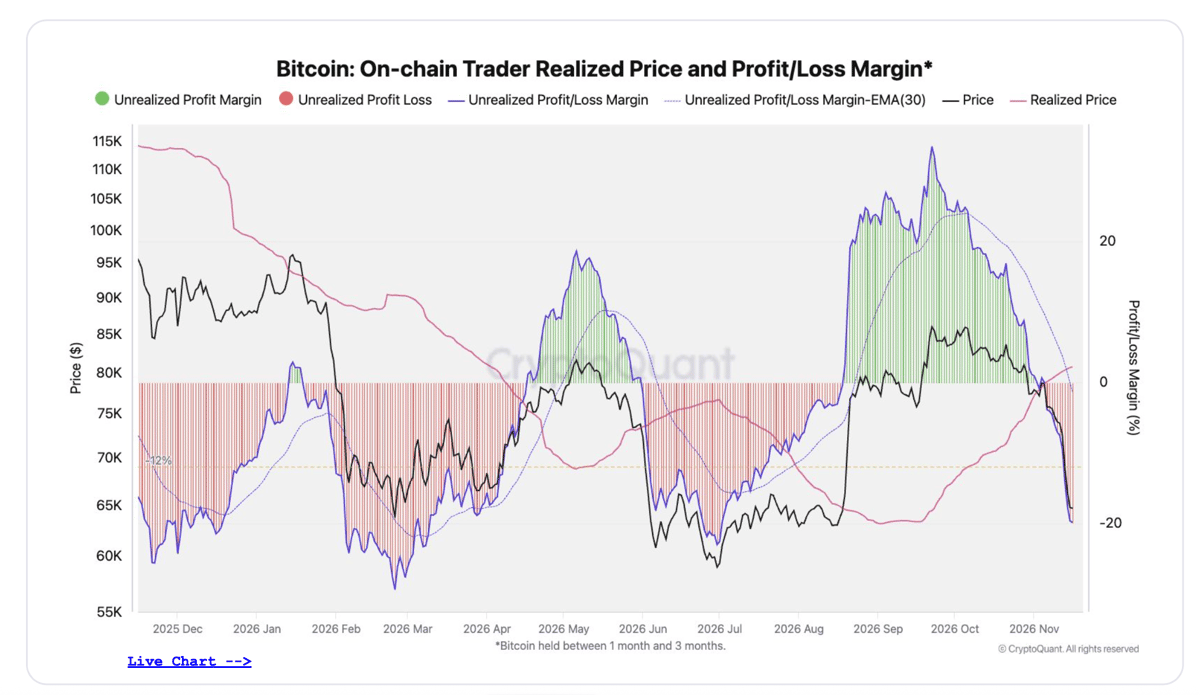
What the ‘value zone’ does—and does not—mean
CryptoQuant said traders’ unrealized profit/loss margin had fallen to −20%, its most negative level since July 1. Moreno interpreted that as Bitcoin being cheap relative to traders’ cost basis, not as evidence that the decline had ended. He said bottoming formations tend to last at least two months and that contracting demand and the low Bull Score did not yet support a sustained recovery.
The firm also identified $62,000–$65,000 as a range where long-term holders had sold heavily and new investors had bought. It suggested those buyers could help support the range by defending their purchase prices. That is a conditional market assessment, not a guaranteed price floor.