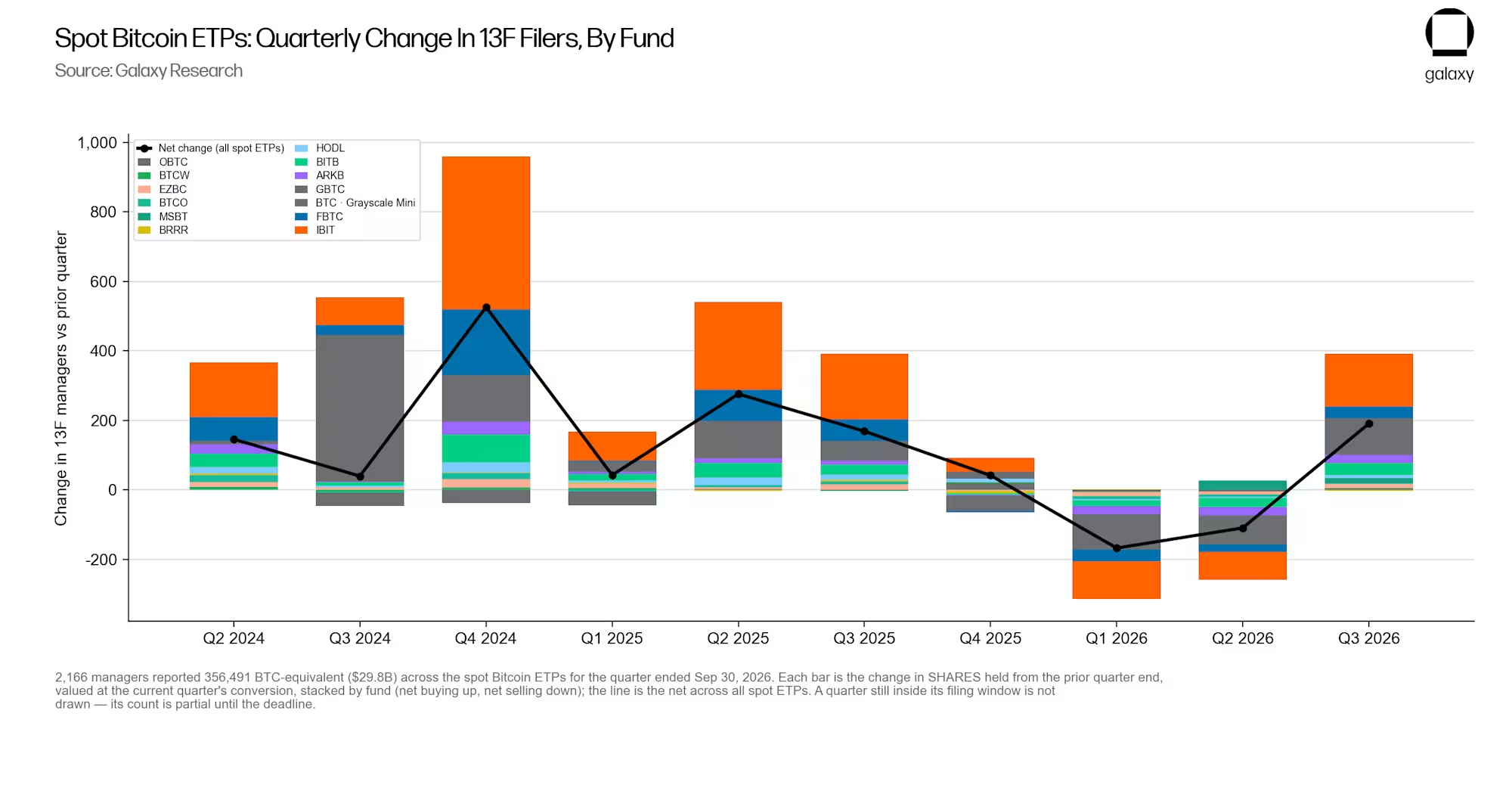
An analysis published on November 20, 2026, found that investment managers filing Form 13F had become net buyers of U.S. spot Bitcoin exchange-traded products (ETPs) in the third quarter. Their reported holdings rose by 49,229 BTC equivalent between June 30 and September 30—more than the 47,054 BTC equivalent they had collectively reduced over the preceding three quarters.
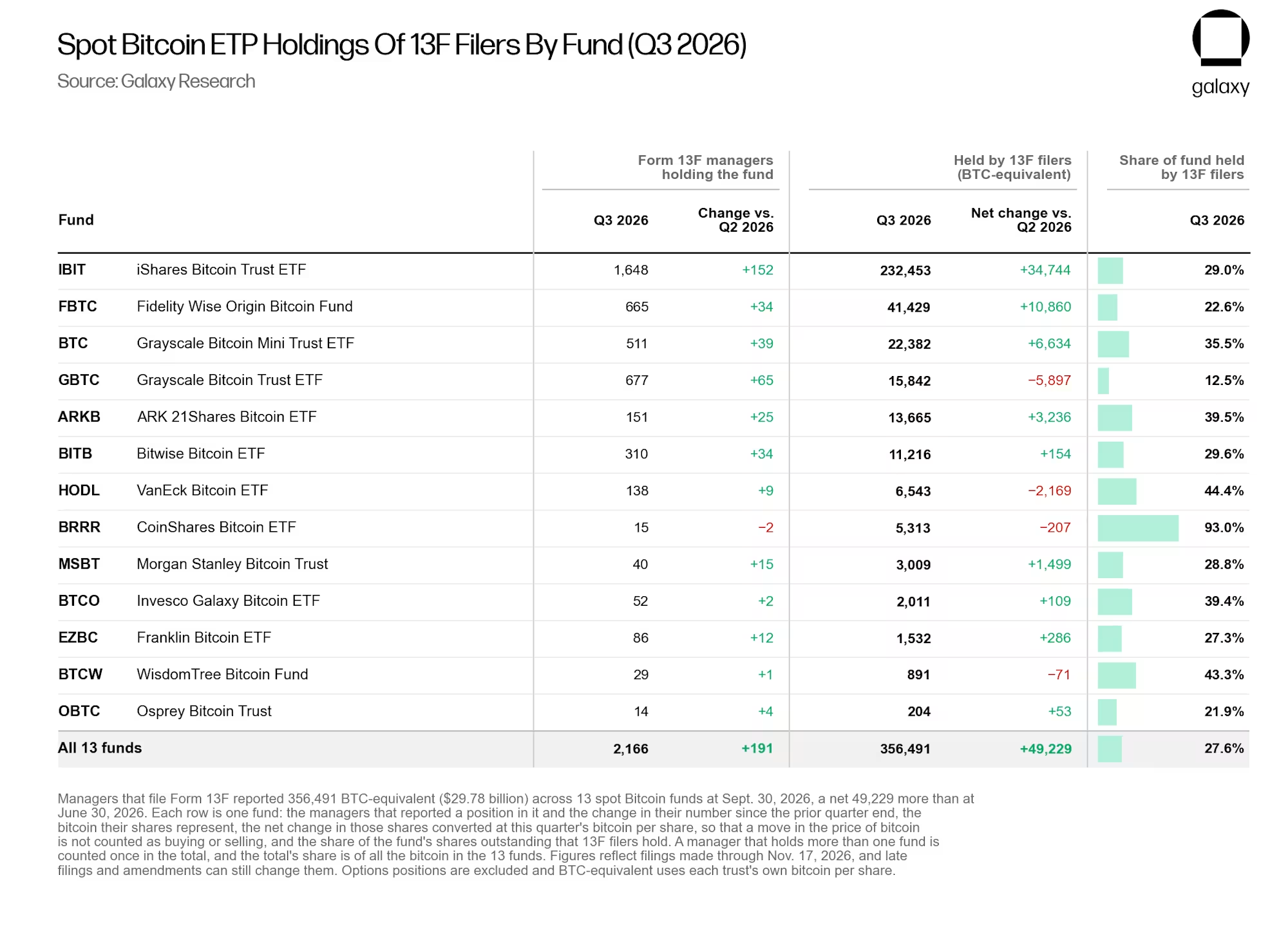
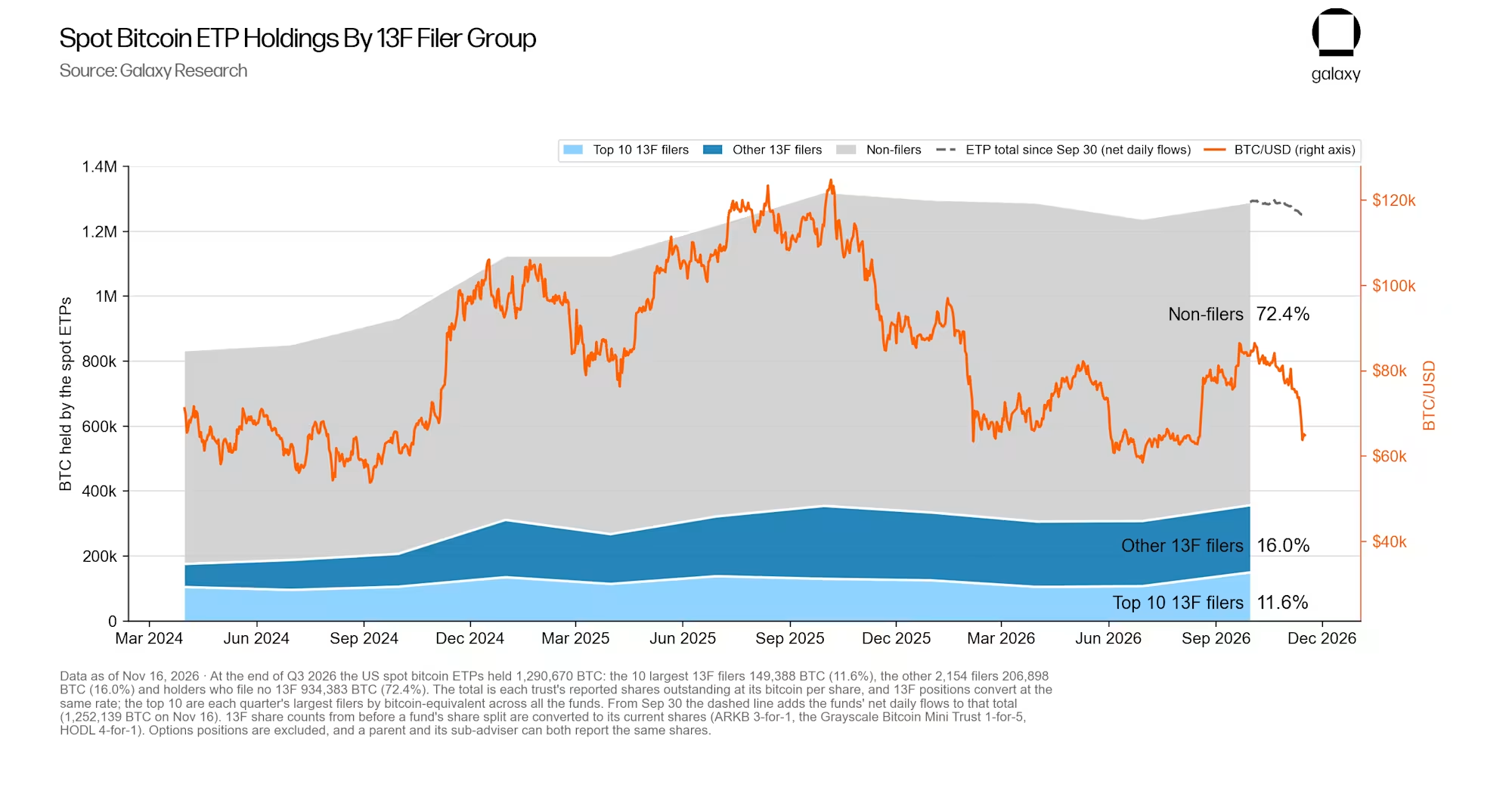
These figures describe shares of funds that hold Bitcoin, expressed as a Bitcoin equivalent. They do not mean every reporting manager bought or held Bitcoin directly. The analysis also gives two different September 30 totals for 13F-reported holdings: 356,491 BTC equivalent in its summary and 356,286 in its detailed holdings section. That discrepancy should be kept in mind when using the totals.
A broader holder list, but concentrated buying
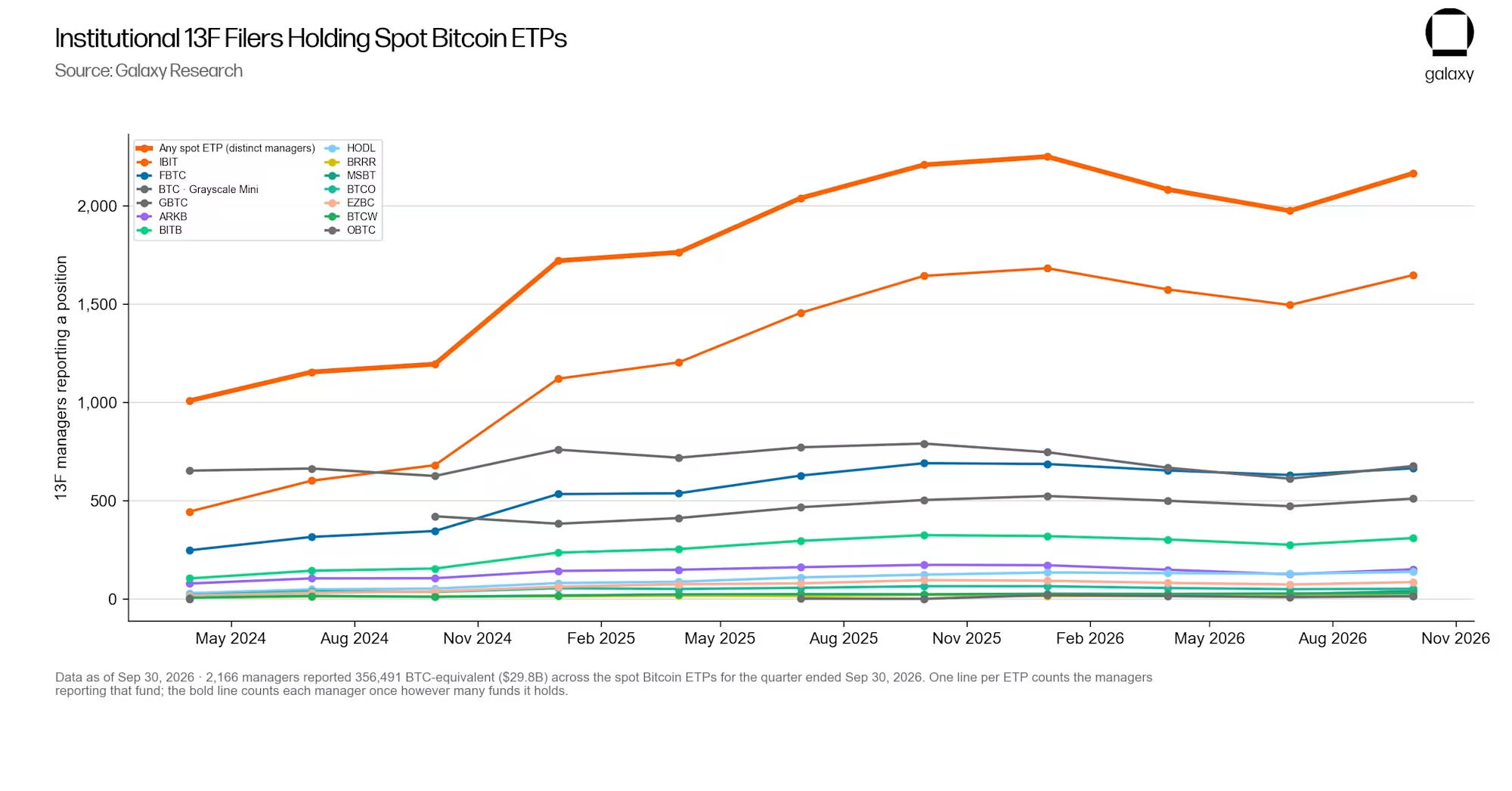
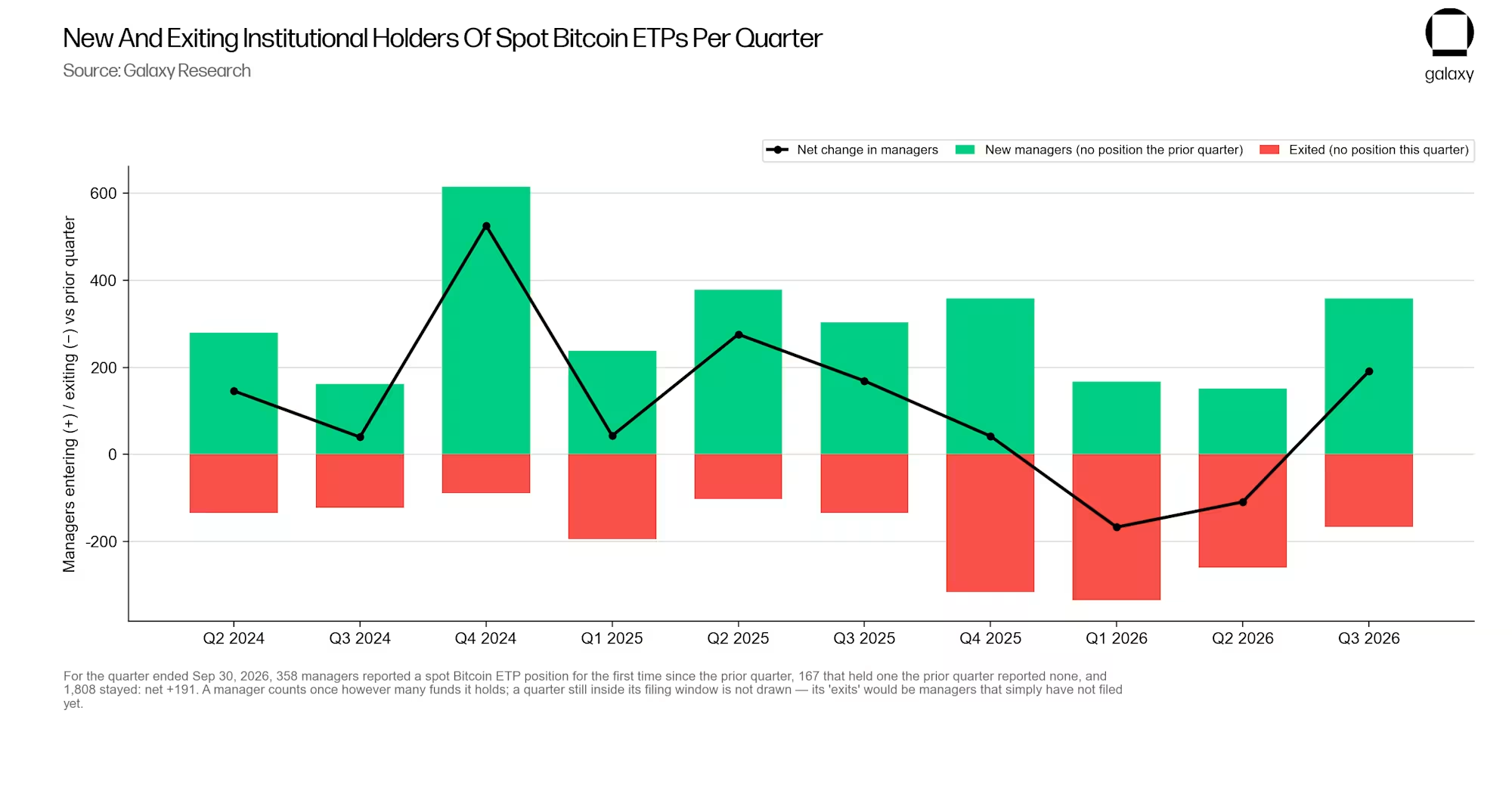
The number of managers reporting at least one spot Bitcoin ETP position rose by 191 to 2,166. There were 358 managers reporting positions after holding none in the prior quarter, while 167 no longer reported a position. New entrants together held 9,554 BTC equivalent.
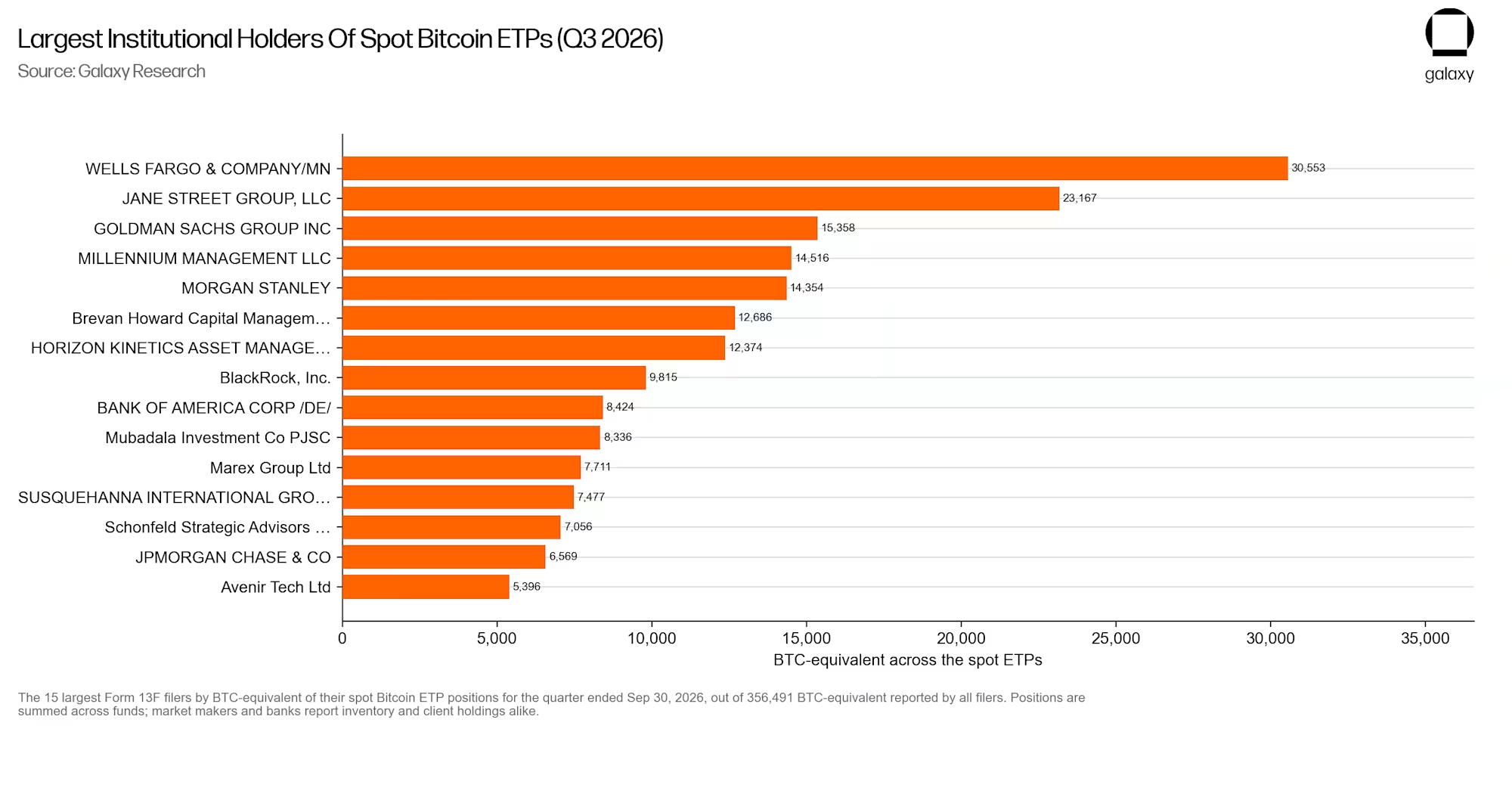
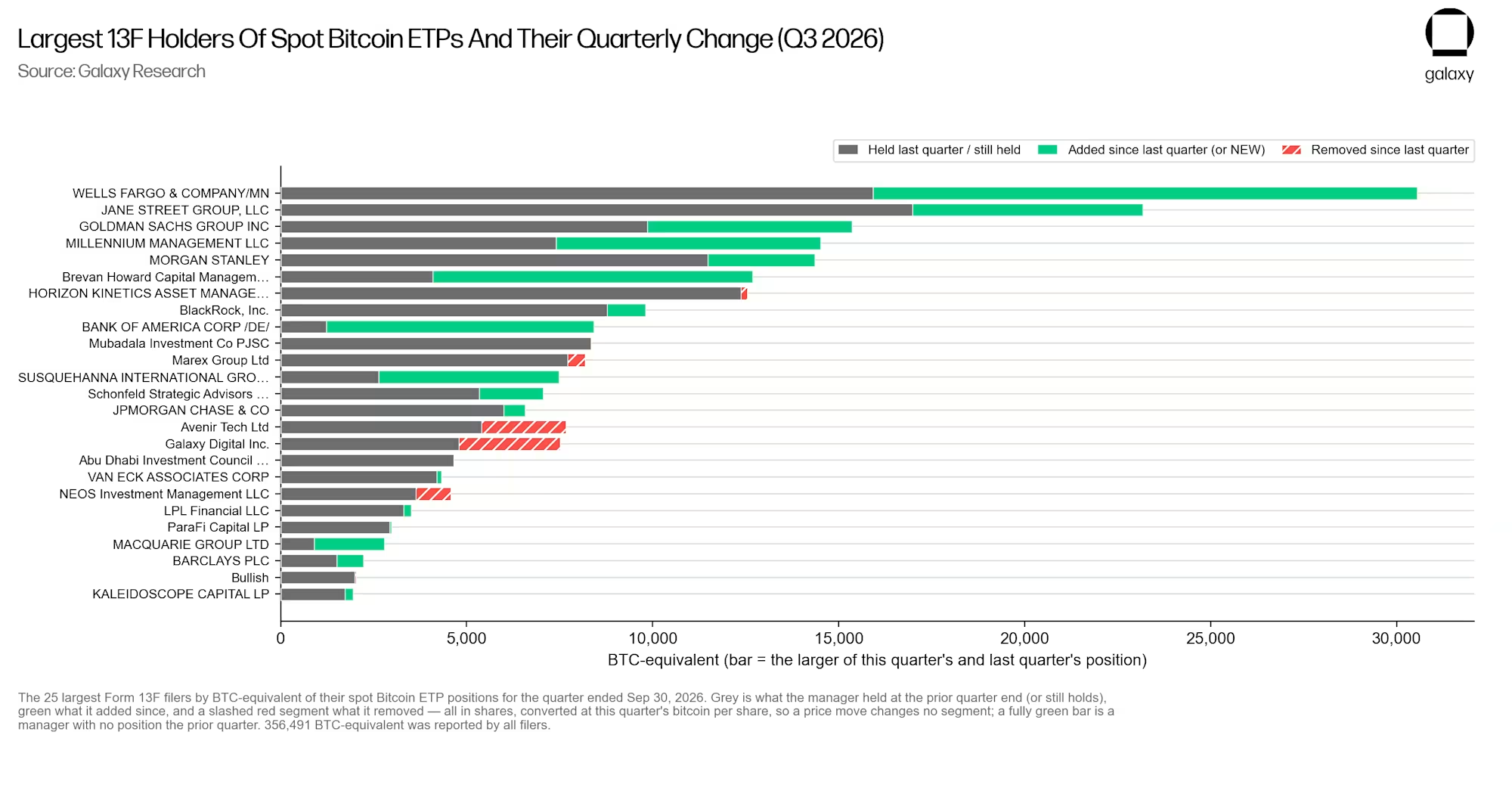
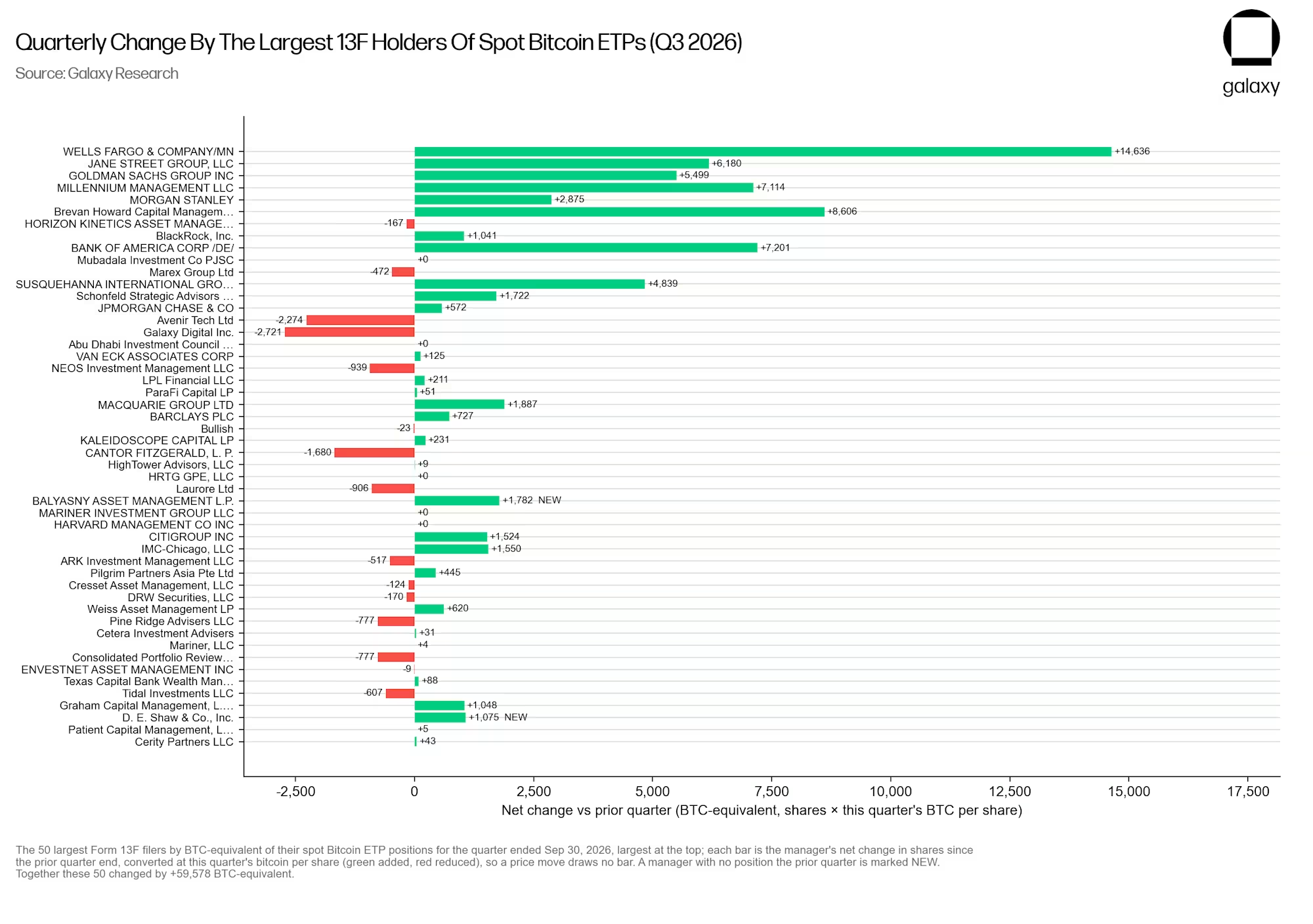
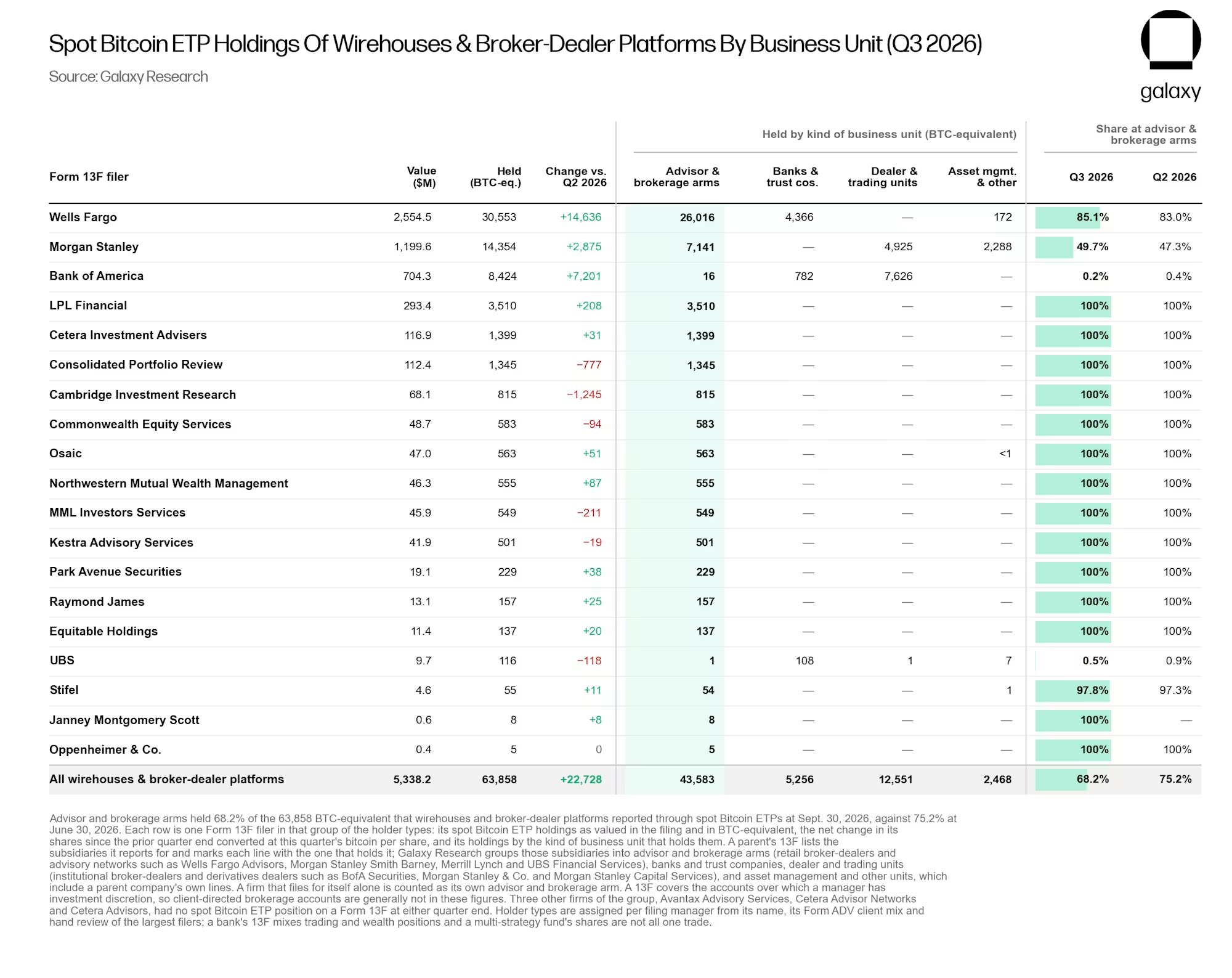
The increase in holdings came principally from larger managers. The top 50 added a net 59,578 BTC equivalent; all other managers combined reduced their positions by 10,349. Wells Fargo reported 30,553 BTC equivalent across ten funds, becoming the largest 13F-reported holder ahead of Jane Street’s 23,167.
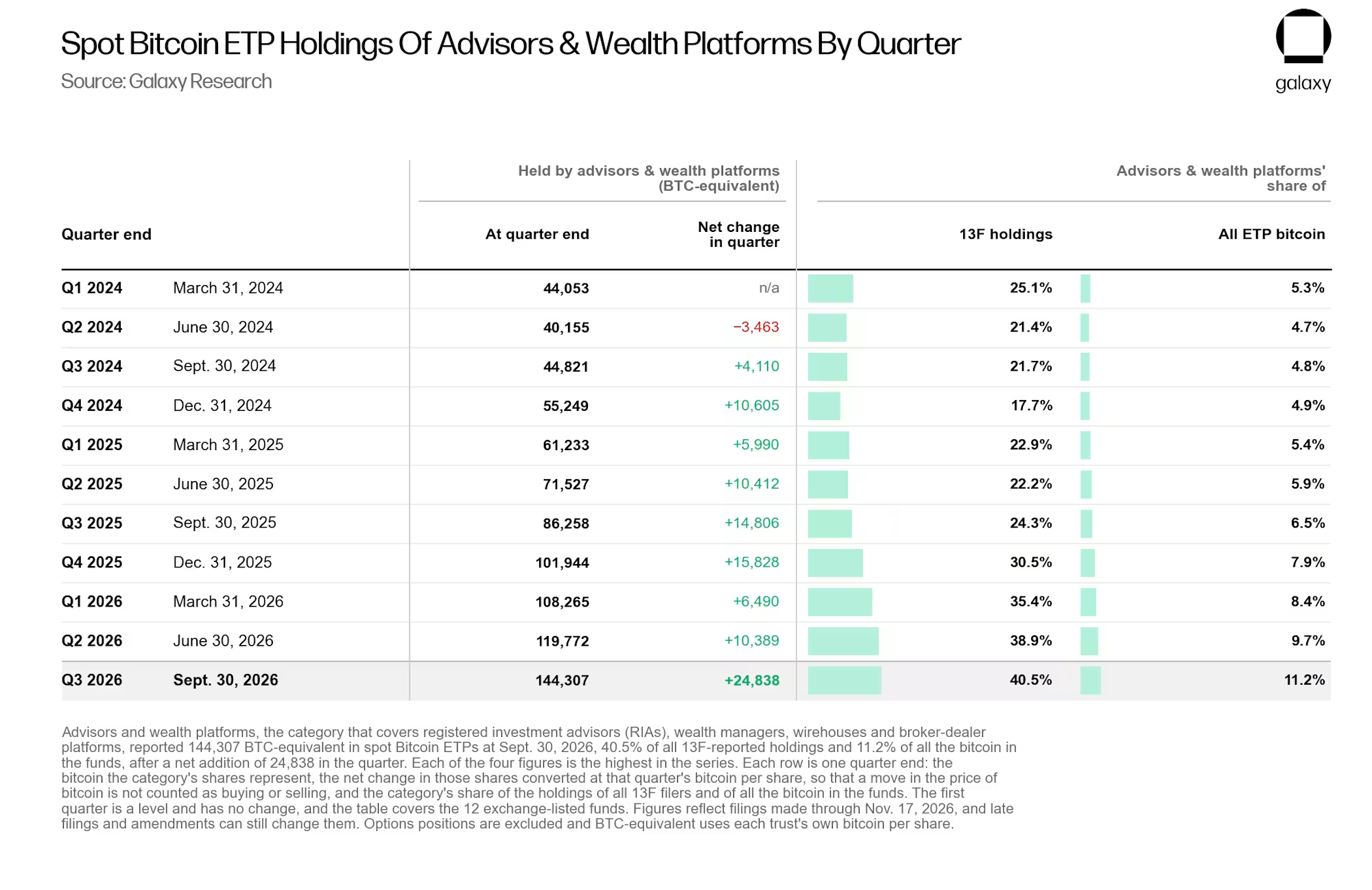
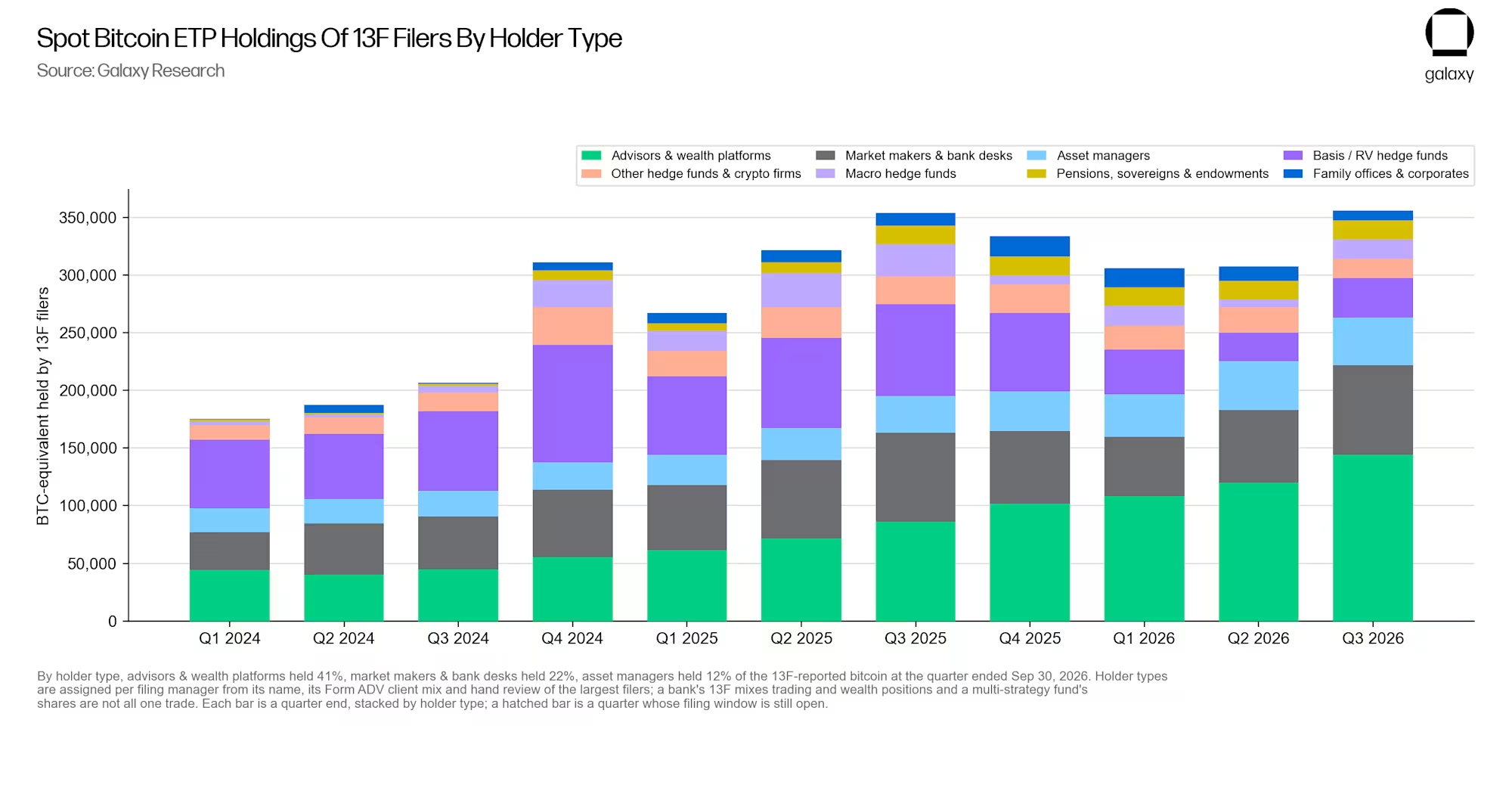
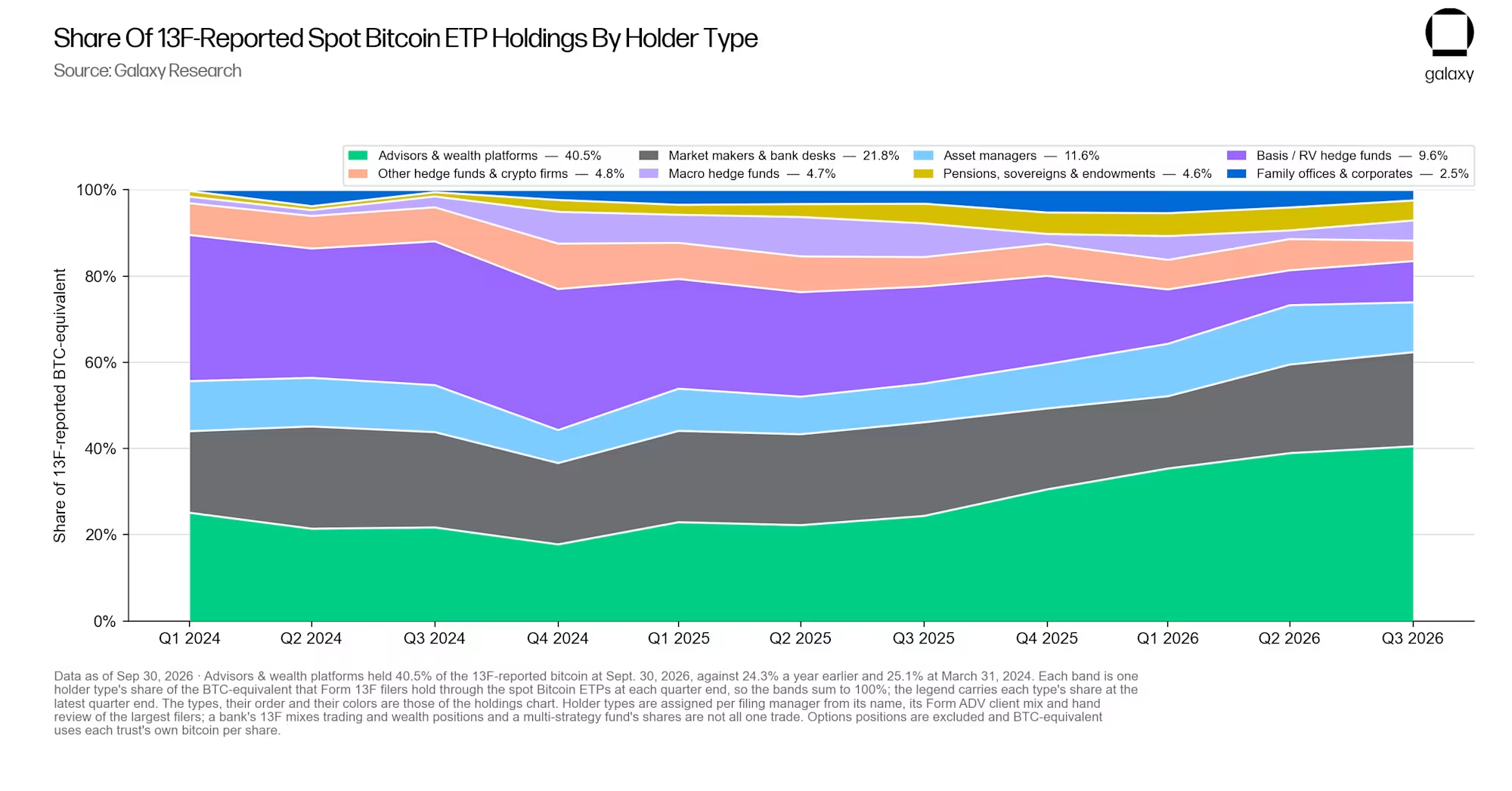
Advisers and wealth-management platforms reported 144,307 BTC equivalent, or 40.5% of the 13F-reported total. The analysis says this category accounted for roughly half of the quarter’s net increase. BlackRock’s IBIT represented 232,453 BTC equivalent, or 65.2% of reported holdings, and received 34,744 BTC equivalent of the quarter’s net increase.
What the filings cannot establish
Form 13F captures certain quarter-end long positions in accounts over which a manager has investment discretion. It does not show short positions or most derivatives, so a market maker’s or hedge fund’s ETP shares may be offset by positions the filing does not reveal. Client-directed brokerage accounts are generally outside this measure. A reported ETP holding therefore cannot, by itself, establish a manager’s net Bitcoin exposure or a client’s reason for investing.
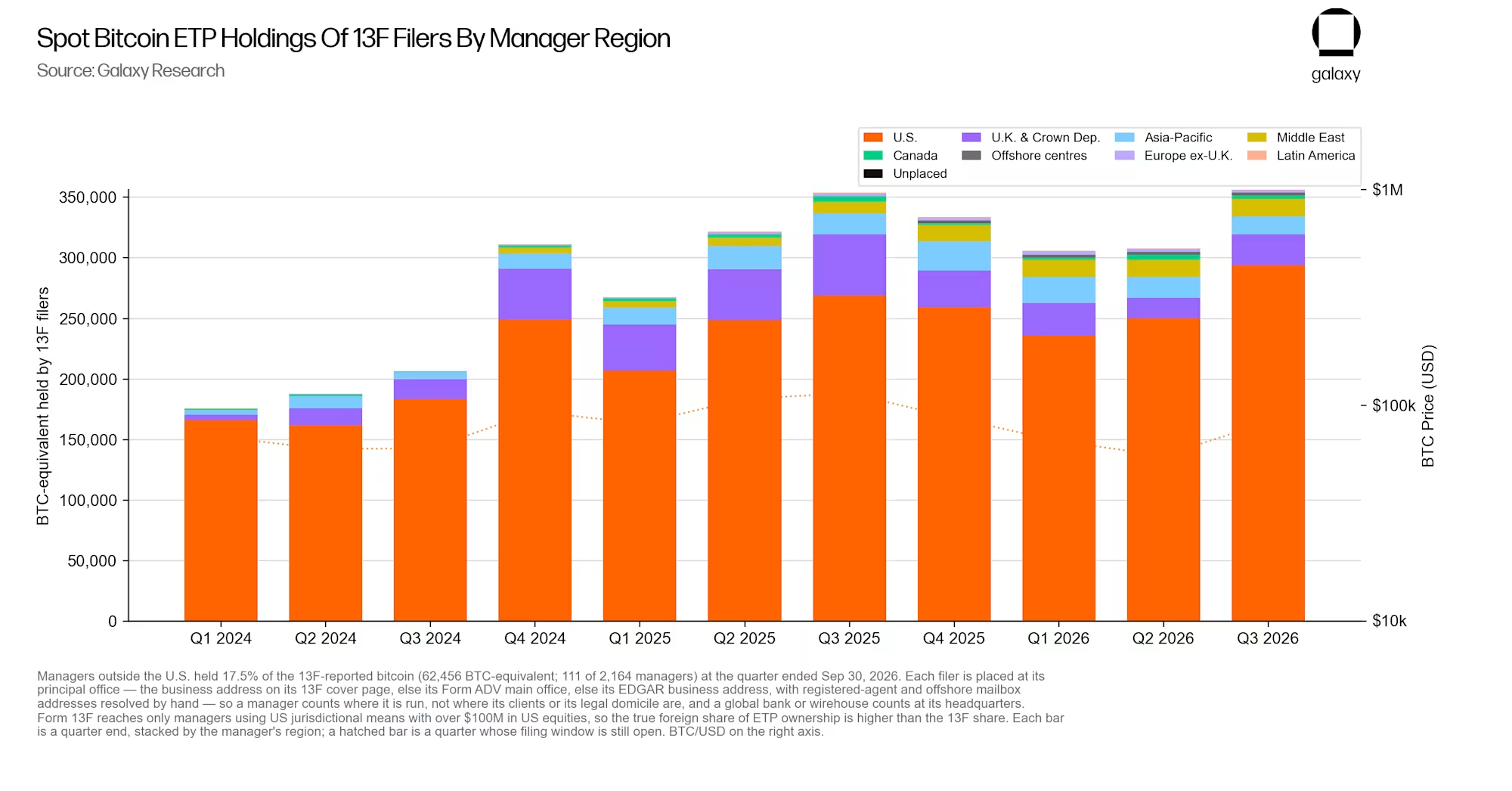
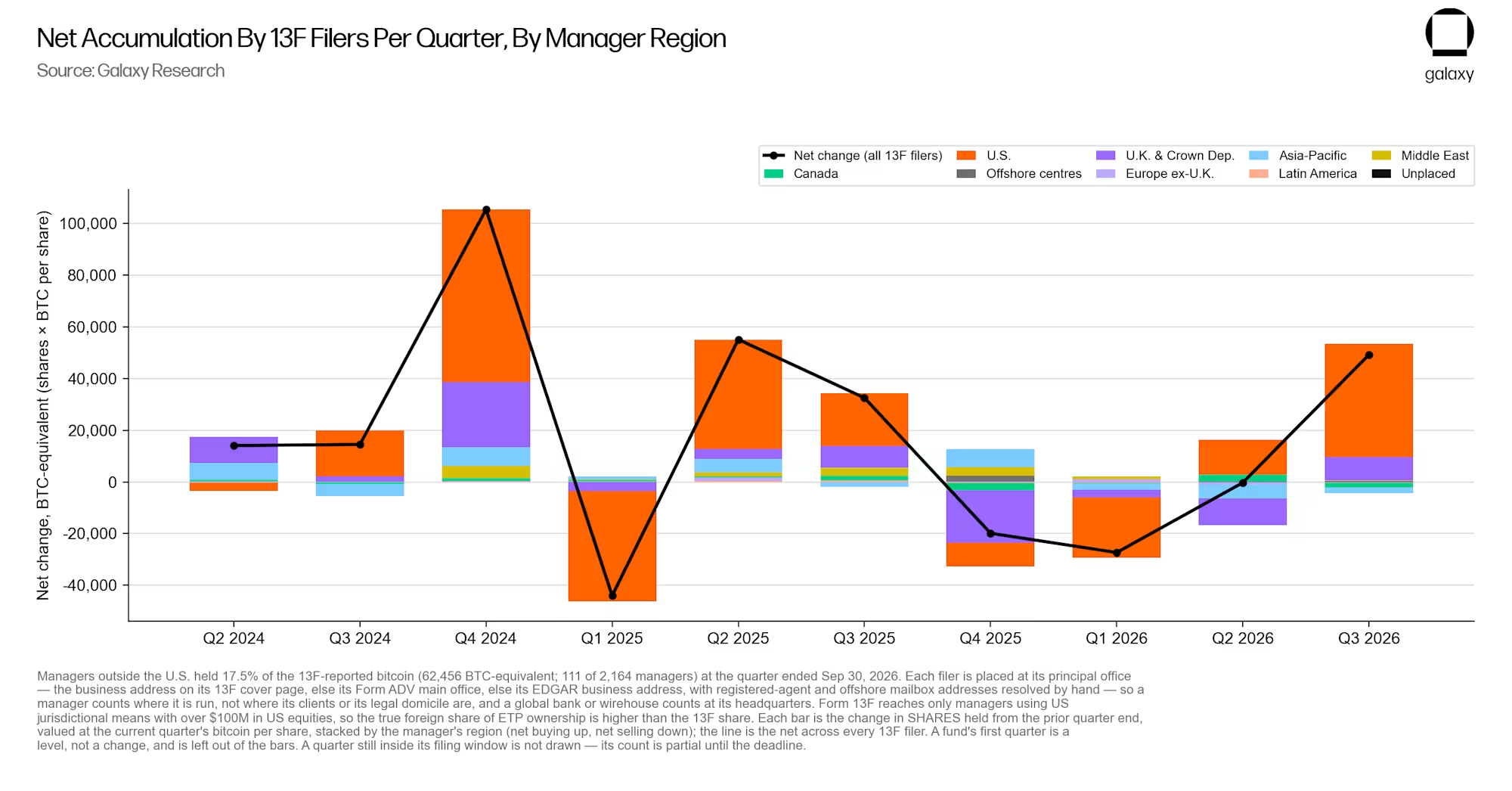
The filings describe September 30, not subsequent trading. According to the analysis, spot Bitcoin ETPs collectively held 1,290,670 BTC at that date, falling by 38,531 BTC to 1,252,139 by November 16. It also reports a Bitcoin price decline from $83,580 to $64,943 over that interval. Those later fund-level figures do not reveal what individual 13F filers did after quarter-end; that requires later filings. The analysis covered 2,166 filings submitted by November 17 and noted that late or amended filings could change its figures.
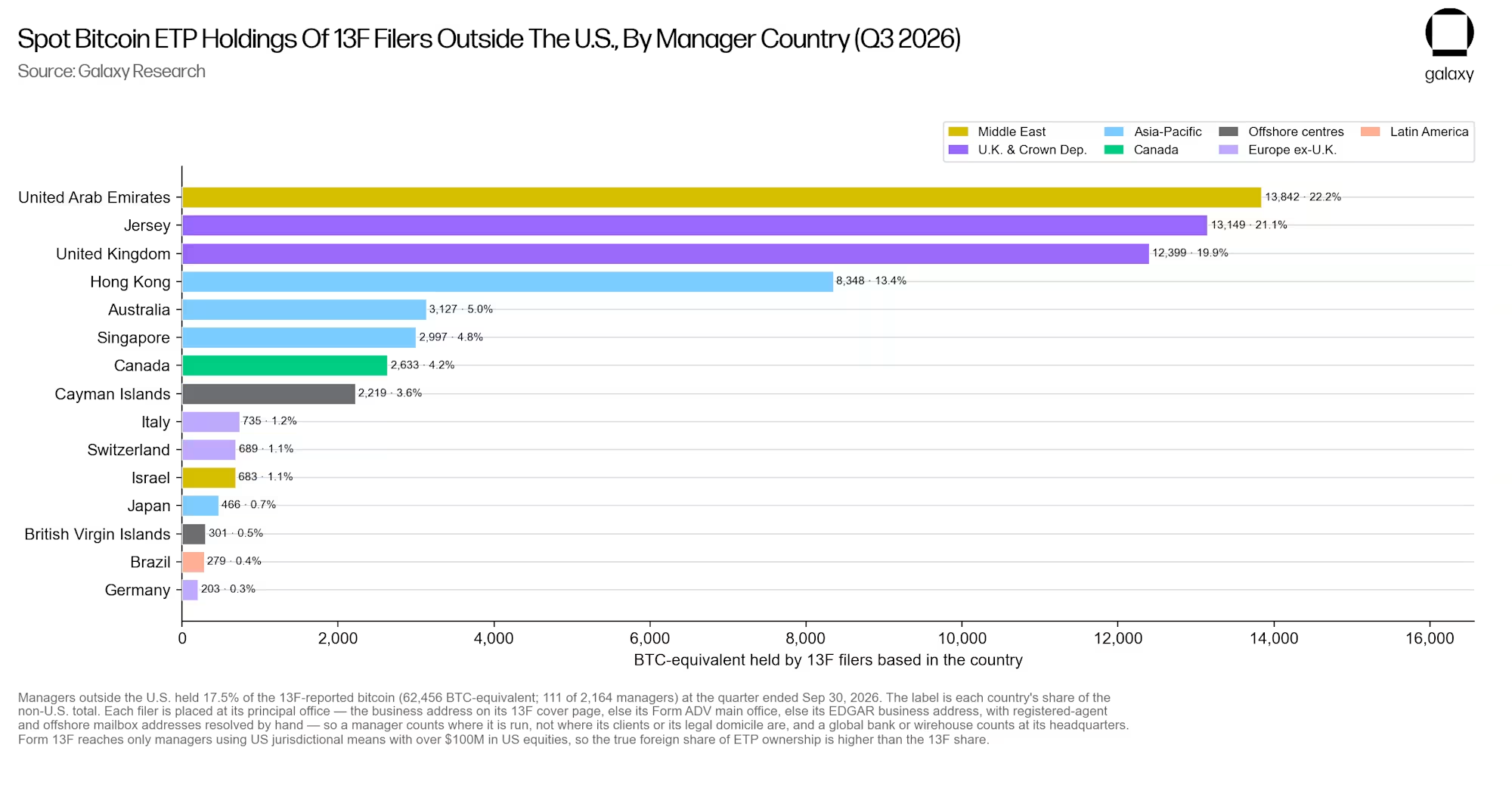
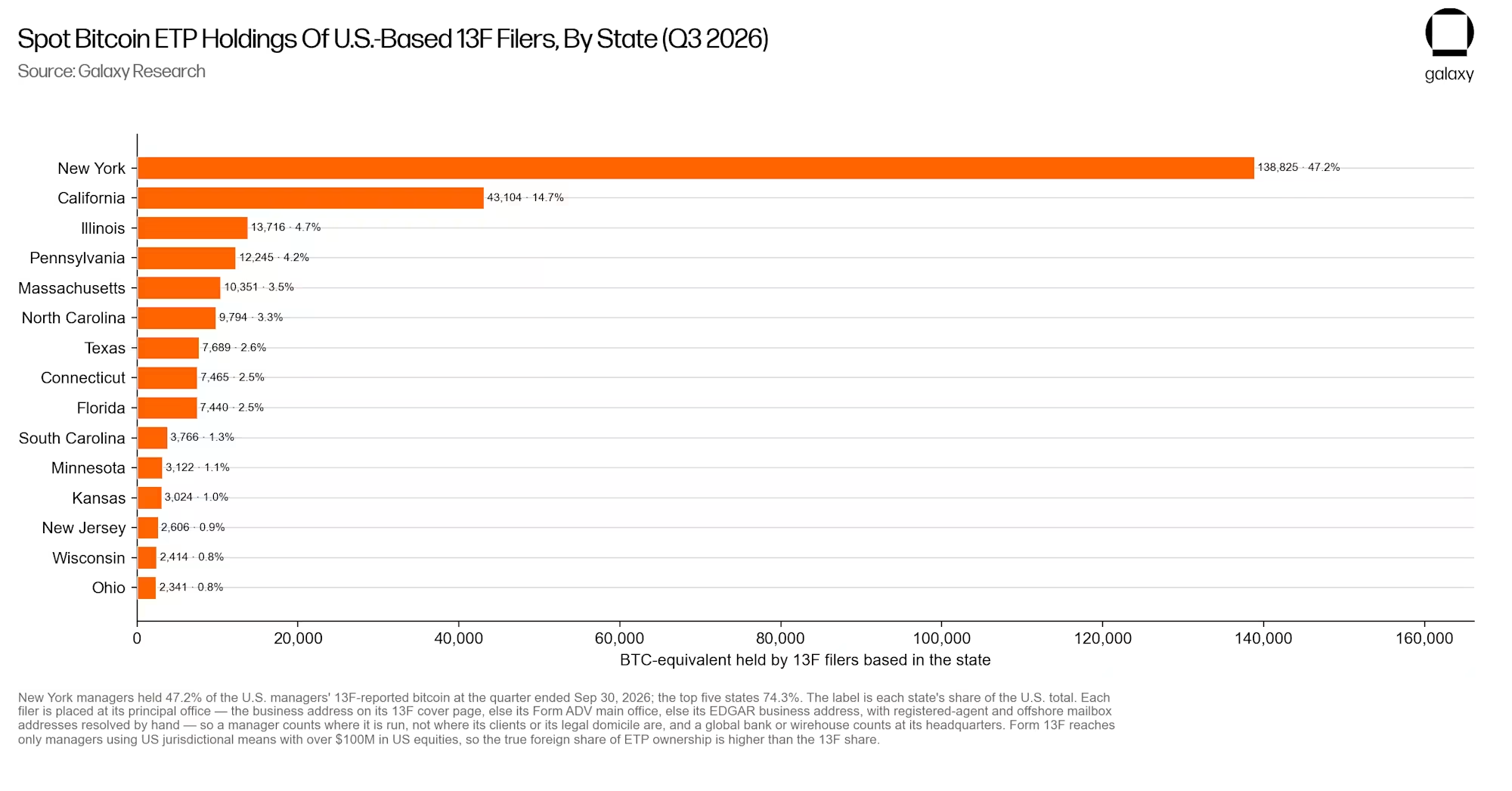
For a monetary comparison, ETP ownership is distinct from direct custody of Bitcoin: investors hold fund shares, while the funds hold the underlying asset. The filings document how reported fund exposure was distributed among managers, not whether Bitcoin protected purchasing power or behaved like gold during the period.