Originally reported on November 6, 2026, at 23:04 (UTC+8). Bitcoin’s November 5 decline offered a test of the idea that it had begun trading more like gold than a technology stock. On that day, it fell alongside US equities while gold edged higher. One session cannot settle what kind of monetary asset Bitcoin is, but it does show the limits of treating “digital gold” as a fixed description of its price behavior.
A sharp reversal
Bitcoin had rebounded to about $81,000 on November 4. According to CoinGecko figures cited in the original report, it fell from roughly $80,300 to an intraday low near $75,200 on November 5, closing around $76,000—about 5.5% below the previous day. The Nasdaq Composite lost 5.52%; the report puts the Nasdaq 100’s decline at about 6.5%. Gold, by contrast, rose about 0.9%.
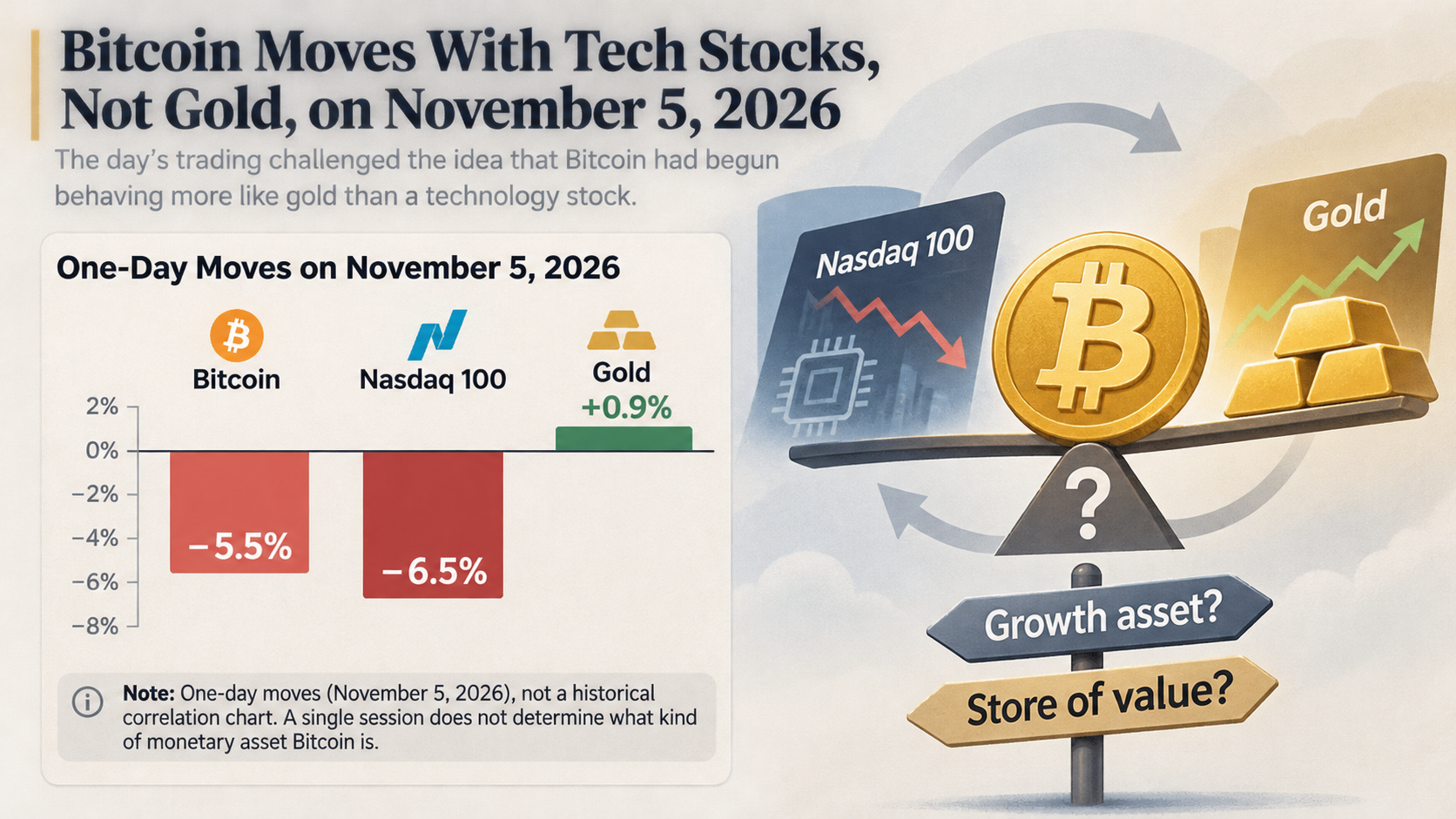
The report links the broader sell-off to concerns about technology shares and data-center spending, citing Reuters on market worries after Democrats took control of Congress. It also describes a possible route by which equity-market stress reached Bitcoin: selling of spot Bitcoin ETFs, followed by leveraged liquidations. Farside data cited in the report show approximately $1.5 billion in net Bitcoin ETF outflows from October 30 through November 5, including more than $430 million on November 5. Those flows and the simultaneous price decline are observable; the account of precisely how selling passed through the market is the report’s explanation, not proof of a single cause.
The comparison changes with the window
In a February 9 report, Grayscale research head Zach Pandl said Bitcoin’s price movements over at least the preceding 12 months had been closely associated with high-valuation technology software stocks. By late August, Grayscale’s three-month measures suggested a different picture: Bitcoin’s co-movement with gold had risen from near zero at the start of the year to above 50%, while its measure against the Nasdaq 100 had fallen from above 60% to around 33%.

K33 Research offered a caution on October 21. It found that Bitcoin and Nasdaq returns had again become closely aligned over a two-week period. These are different observation windows, not permanent classifications. November 5 supplied another example of Bitcoin moving with technology stocks rather than gold; it did not establish that it will always do so.
Gold’s own record in the report complicates any simple safe-haven comparison. In an October 23 ranking by Creative Planning strategist Charlie Bilello, Bitcoin was down 7.3% and gold 7.5% for the year to that point, placing both at the bottom of 21 asset categories. Those figures describe a particular period, not a general verdict on either asset’s ability to preserve purchasing power.
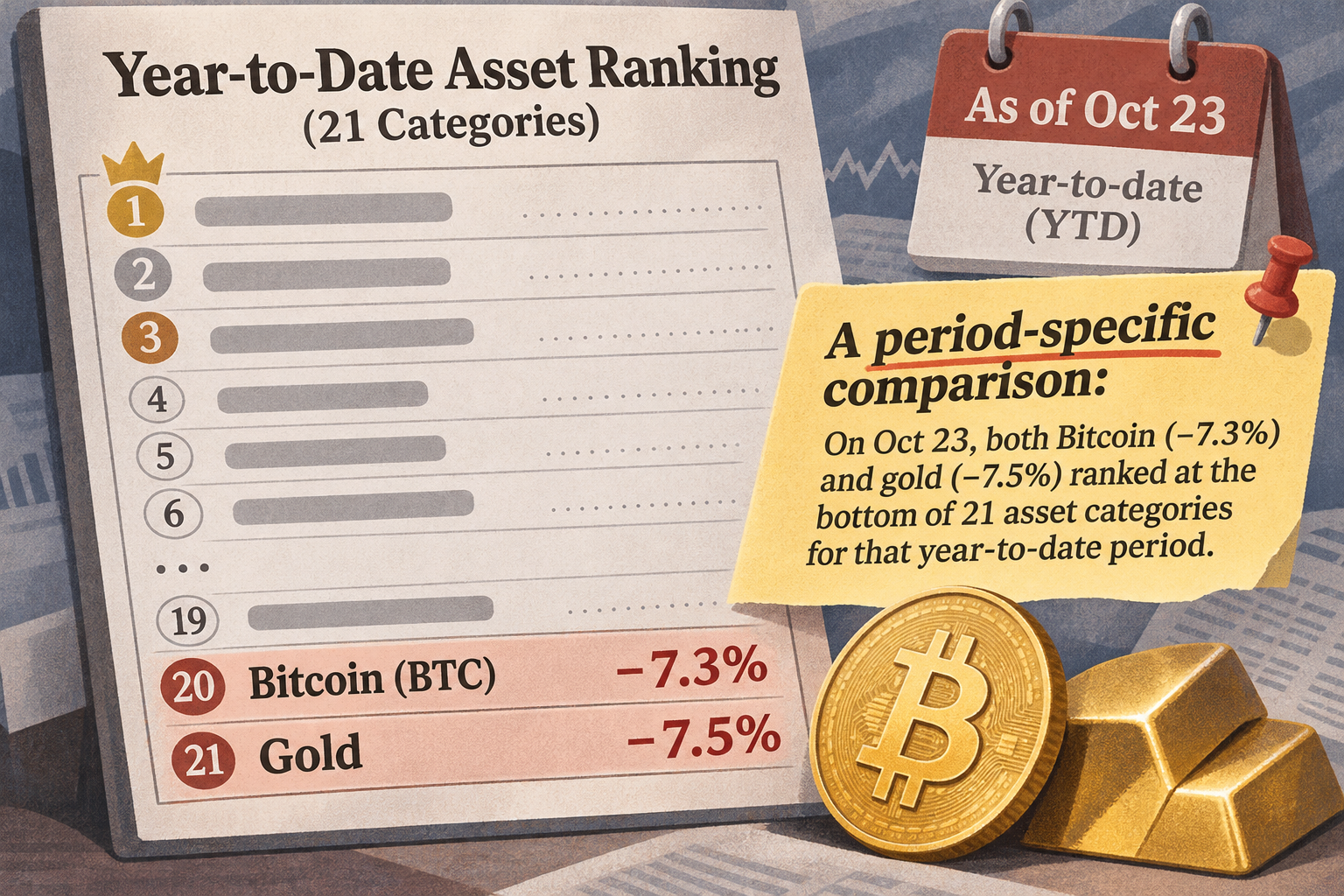
Pandl’s formulation in February was conditional: Grayscale considers Bitcoin capable of behaving both like a store-of-value asset and like a growth asset, and said its price might eventually behave more like gold if it succeeds as a monetary asset over the long term. The November sell-off cannot answer that long-term question. It does show why a changing correlation, however striking, is insufficient evidence of a durable hedge.
Source: techflowpost.com (originally published 2026-11-06 23:04 UTC+8)