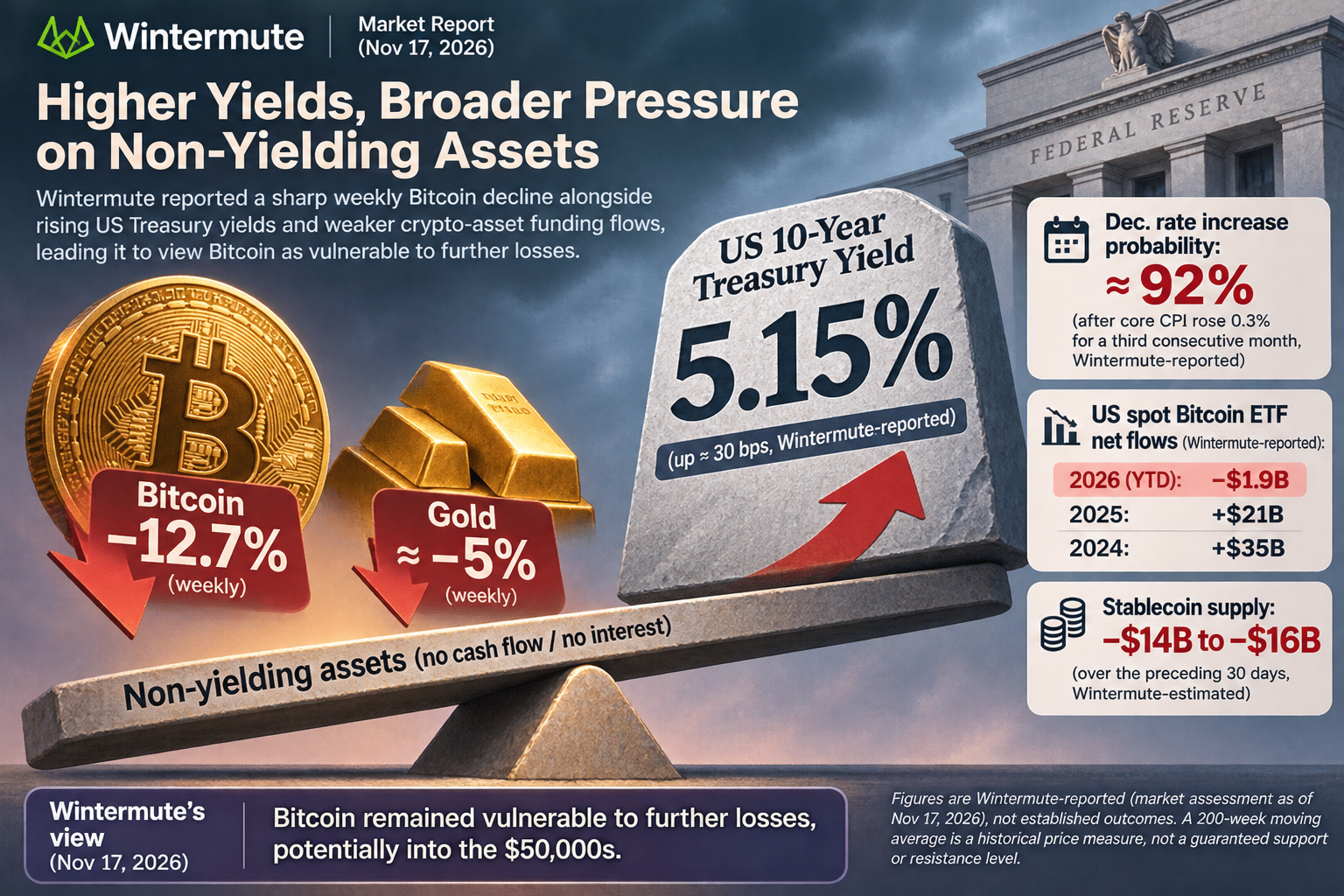
In a report published on November 17, 2026, Wintermute described a sharp weekly Bitcoin decline alongside rising US Treasury yields and weaker crypto-asset funding flows. Its conclusion—that Bitcoin remained vulnerable to further losses—was a market assessment, not an established outcome.
Rising yields and a difficult week for non-yielding assets
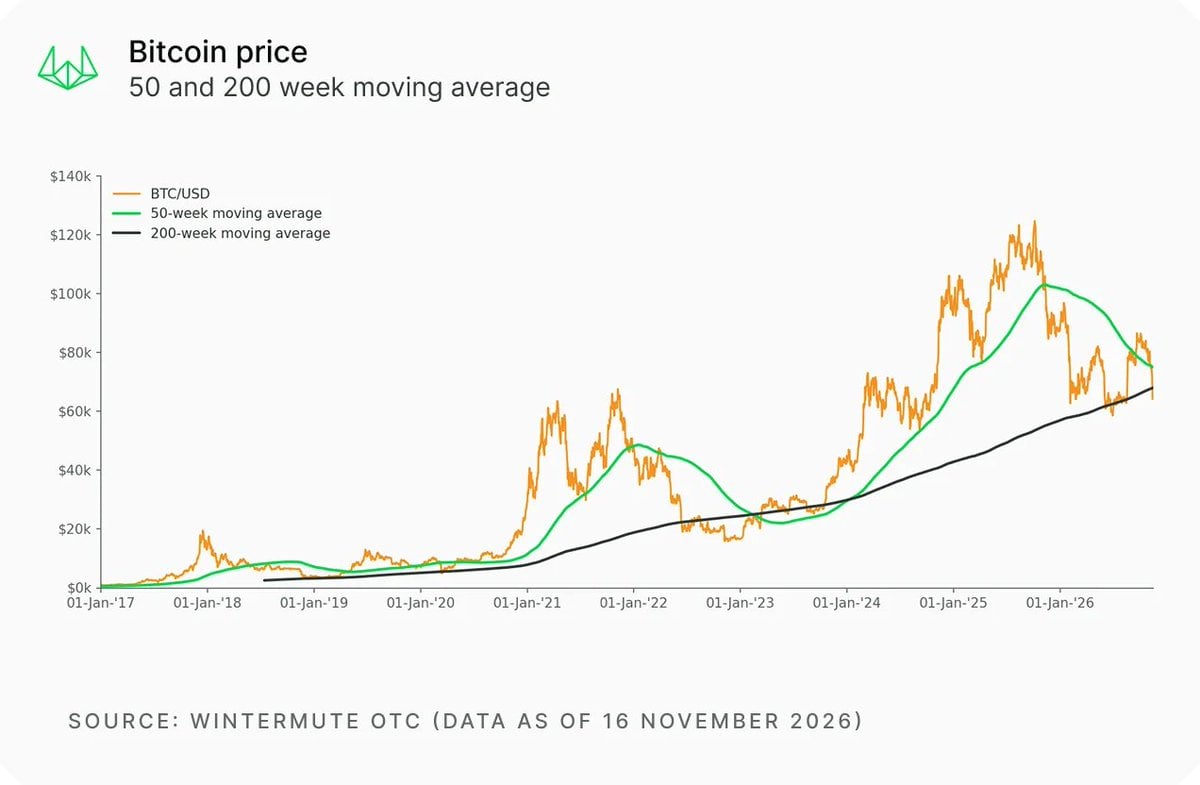
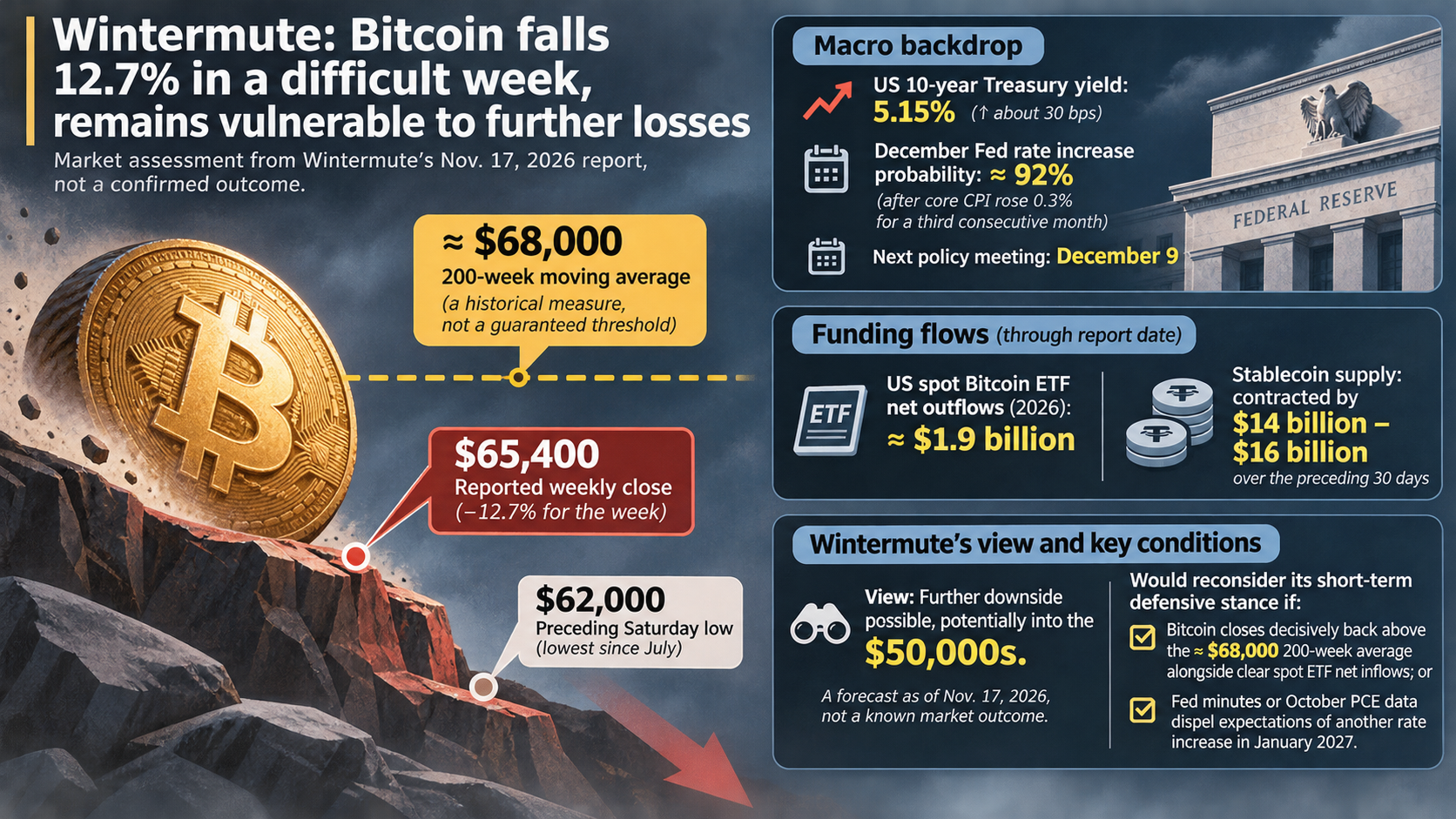
Wintermute reported that Bitcoin fell 12.7% for the week to $65,400, closing below its roughly $68,000 200-week moving average. The US 10-year Treasury yield rose about 30 basis points to 5.15%. The report said markets were pricing an approximately 92% probability of a December Federal Reserve rate increase after core CPI rose 0.3% for a third consecutive month. The next policy meeting was scheduled for December 9.
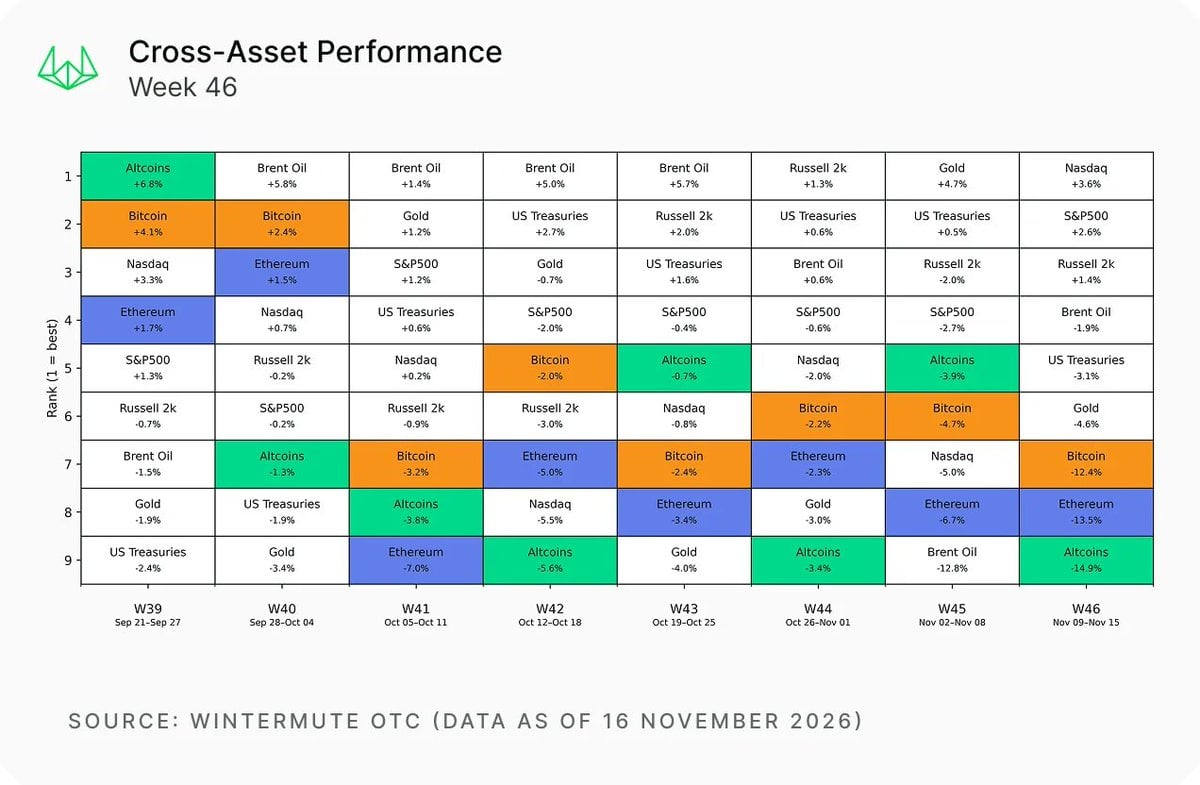
Gold also fell about 5% to $3,900, according to the report, while the S&P 500 gained 2.5%. Wintermute interpreted the simultaneous pressure on gold and crypto as a response to higher rates. Bitcoin itself produces no cash flow, and gold does not pay interest; neither characteristic, however, establishes how either asset will perform in every inflationary period or rate cycle. This week’s reported price moves cannot, on their own, establish a lasting relationship between the two.
Funding flows behind Wintermute’s cautious view
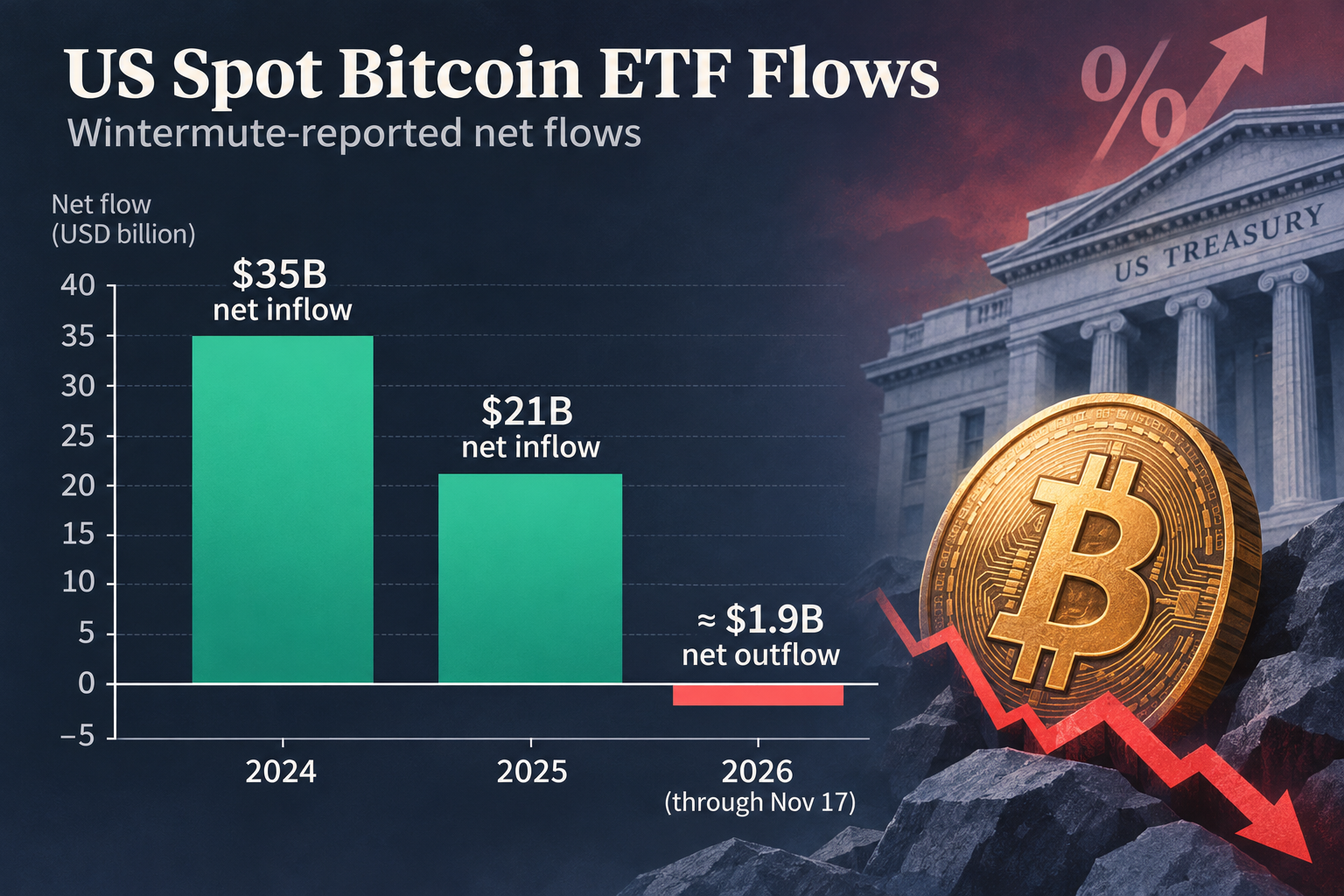
Wintermute put US spot Bitcoin ETF net outflows at about $1.9 billion for 2026 through the report date, versus net inflows of $21 billion in 2025 and $35 billion in 2024. It also estimated that stablecoin supply had contracted by $14 billion to $16 billion over the preceding 30 days. These figures informed its view that funding conditions had weakened; they do not by themselves prove what caused Bitcoin’s price decline.
The report said Bitcoin had briefly reached $62,000 on the preceding Saturday, its lowest level since July. It cited roughly $170 million in crypto liquidations over a 24-hour period ending Sunday, about 80% of them long positions. Wintermute viewed the subsequent bounce as more consistent with short covering than fresh demand. That is its interpretation of the trading activity, not a confirmed identification of every buyer’s motive.
What the forecast depends on
Wintermute expected further downside, potentially into the $50,000s, but did not claim to know the market’s bottom. It said it would reconsider its short-term defensive stance if Bitcoin closed decisively back above the roughly $68,000 200-week average alongside clear spot ETF net inflows, or if forthcoming Federal Reserve minutes or October PCE data dispelled expectations of another rate increase in January 2027.
The moving average is a historical price measure, not a guaranteed support or resistance level. Likewise, Wintermute’s rate expectations and price targets were forecasts made as of November 17, 2026, rather than subsequent developments.