As reported on November 18, 2026, MARA Holdings had shifted from retaining all the Bitcoin it mined to selling both new production and part of its accumulated reserves. By its November 9 third-quarter disclosure, the miner had sold approximately 40,581 BTC during 2026 for about $3 billion. The figure includes sales after the September quarter ended; it is not a nine-month total.
From accumulation to sales
MARA adopted a policy of retaining all mined Bitcoin in July 2024 and also bought BTC on the market. Its holdings reached 44,893 BTC at year-end, including 15,574 BTC bought in the fourth quarter with proceeds from convertible-note financing. The company began allowing sales of newly mined Bitcoin in 2025, then expanded sales to existing balance-sheet holdings in 2026.
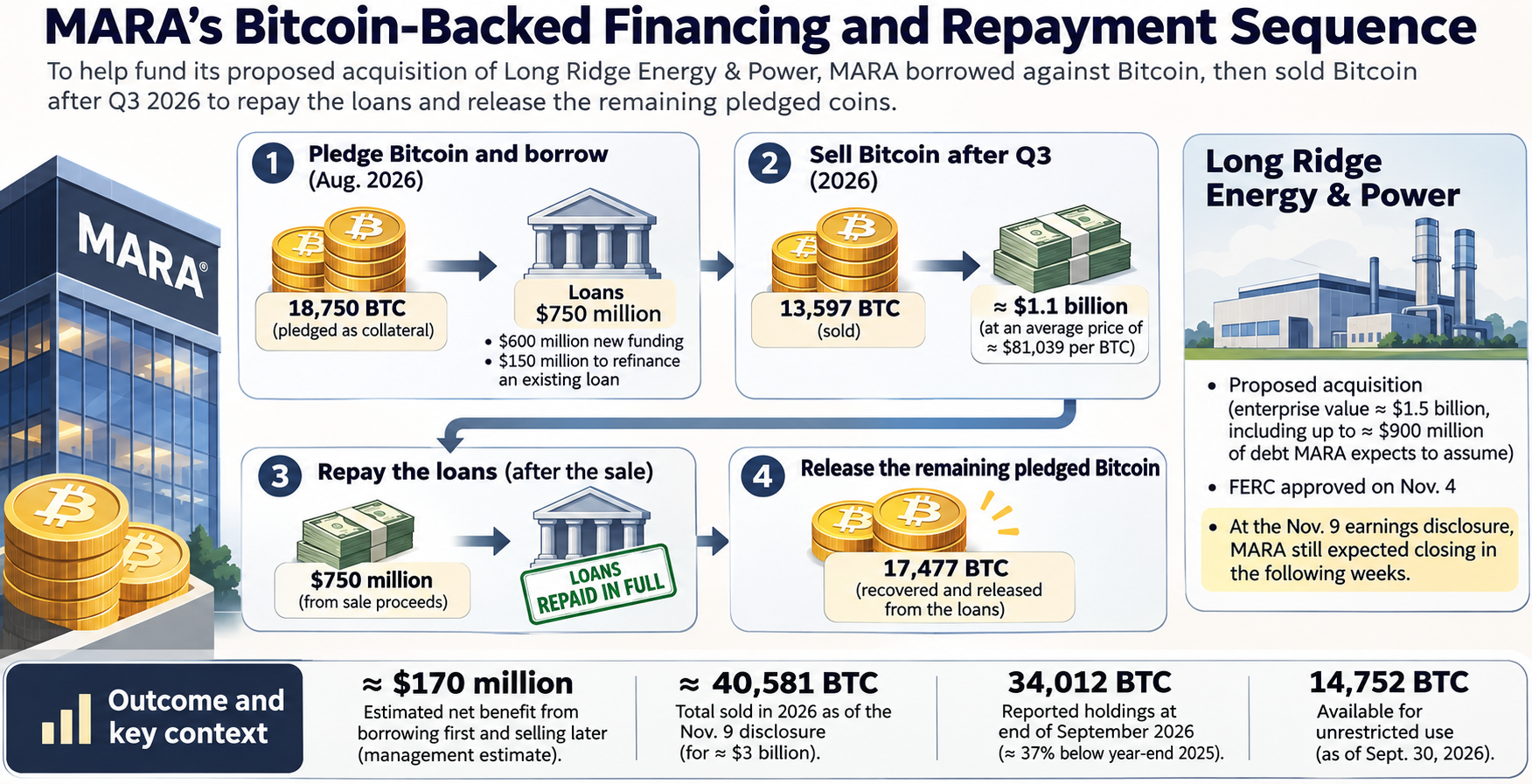
From March 4 to 25, 2026, MARA sold 15,133 BTC for roughly $1.1 billion. It subsequently paid about $913 million to repurchase two series of zero-coupon convertible notes with approximately $1 billion in principal outstanding. Over the first nine months of 2026, it mined 6,916 BTC and sold approximately 26,984 BTC. Its reported holdings stood at 34,012 BTC at the end of September, about 37% below year-end 2025; 14,752 BTC was available for unrestricted use, while the rest was pledged or lent.
The Long Ridge financing
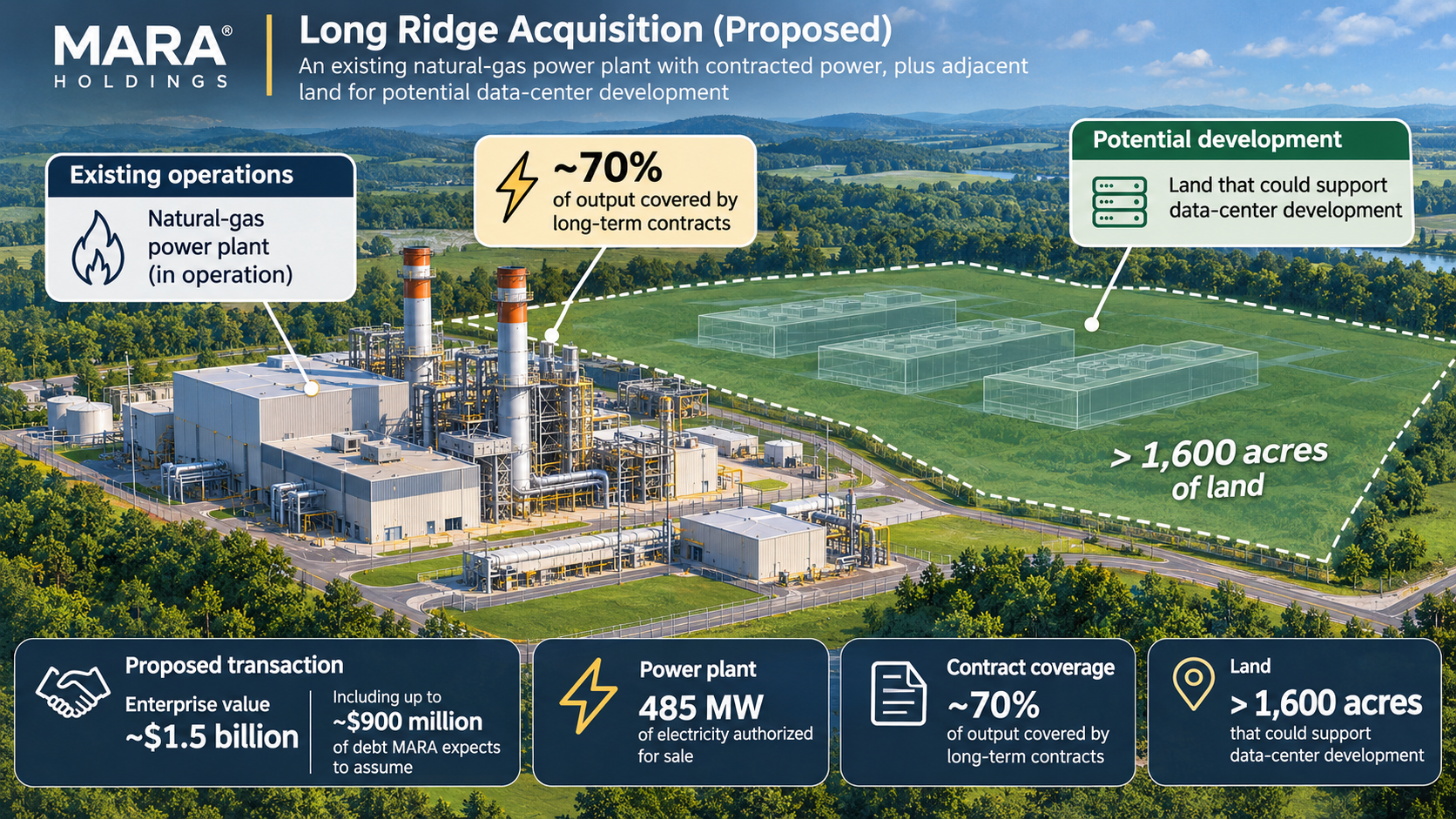
MARA’s proposed acquisition of Long Ridge Energy & Power put the distinction between holding Bitcoin and having it available into focus. The transaction had an enterprise value of about $1.5 billion, including up to approximately $900 million of debt MARA expected to assume. In August, MARA pledged an initial 18,750 BTC to secure $750 million in loans: $600 million of new funding and $150 million to refinance an existing loan.
After the third quarter, MARA sold 13,597 BTC at an average price of approximately $81,039, raising about $1.1 billion. It used $750 million to repay both Bitcoin-backed loans in full and recovered the 17,477 BTC that remained pledged against them. Management estimated that borrowing first and selling later produced a net benefit of about $170 million. That outcome depended on the price path: a decline could instead have brought collateral calls alongside a lower sale price.
The US Federal Energy Regulatory Commission approved the acquisition on November 4. At the November 9 earnings disclosure, MARA still expected closing in the following weeks. Repayment of its acquisition loans did not mean that the proposed acquisition—or Long Ridge’s existing debt—had disappeared.
What the reserves may fund next
Long Ridge’s Ohio assets include an operating natural-gas power plant authorized to sell 485 megawatts of electricity. MARA said long-term contracts covered roughly 70% of its output. The transaction also includes more than 1,600 acres of land that could support data-center development. Those contracts and the work needed to build and finance new facilities limit how quickly the site could supply additional computing capacity or cash flow.
MARA’s board approved a share-repurchase program of up to $500 million on November 9, but the timing and amount of any purchases depend on conditions and available funds. The company also identified AI-infrastructure investment and convertible-note holders’ potential redemption rights beginning in 2027 as possible future reasons to raise cash by selling Bitcoin.
MARA’s case illustrates a constraint on a corporate Bitcoin reserve: its reported BTC balance is not the same as immediately usable cash, particularly when coins are pledged. How much more it sells will depend in part on construction spending and when its power and data-center projects begin generating cash—not on a demonstrated ability of Bitcoin to protect purchasing power.