BitMine bought 7,819 ETH in the week covered by its November 23, 2026 update, bringing its treasury to 6,085,564 ETH. SharpLink took a different approach to increasing the amount of ether behind each of its shares: it spent $10 million buying back its own stock. On November 25, ether traded at $1,692.78, down 1.9%, even as its price relative to bitcoin had held comparatively steady.
Buying ether versus buying back shares
BitMine, the largest Ethereum treasury company, reported $11.1 billion in investments as of November 23. Its ether was worth approximately $10.4 billion at the valuation price of $1,713 per token. The company also held 216 BTC.
BitMine had staked 5.22 million ETH, about 86% of its ether holdings. It estimated that this stake could generate $245 million in annualized revenue, rising to a potential $286 million if it staked all its ether. Those figures are projections, not realized revenue.
SharpLink’s buyback of its SBET shares serves a different treasury objective. The company aims to increase ETH per share: if its ether holdings stay constant while the number of outstanding shares falls, each remaining share represents more ether. That does not require another ETH purchase. CoinShares, by contrast, sold its entire ether holding in October for $19.3 million and planned to use the proceeds toward a $40 million share buyback program.
Ether’s relative strength was not a confirmed reversal
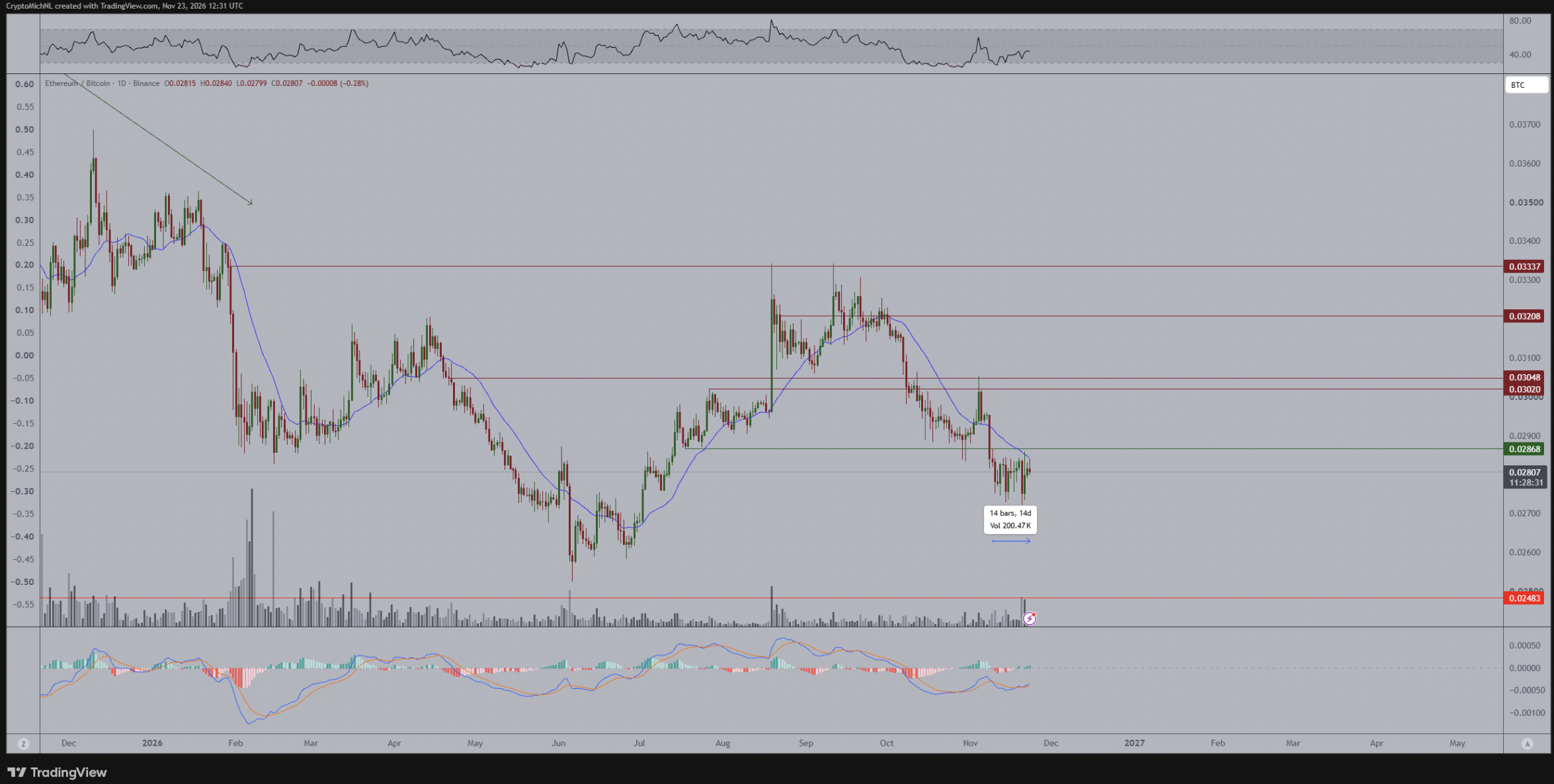
Analyst Michaël van de Poppe noted that ether had remained relatively stable against bitcoin while bitcoin fell 25% over two weeks. He viewed that as a sign of strength because altcoins typically lose ground against bitcoin in a downturn. For a possible trend reversal, he was looking for ETH to trade above 0.0290 BTC and regain its 21-day moving average.
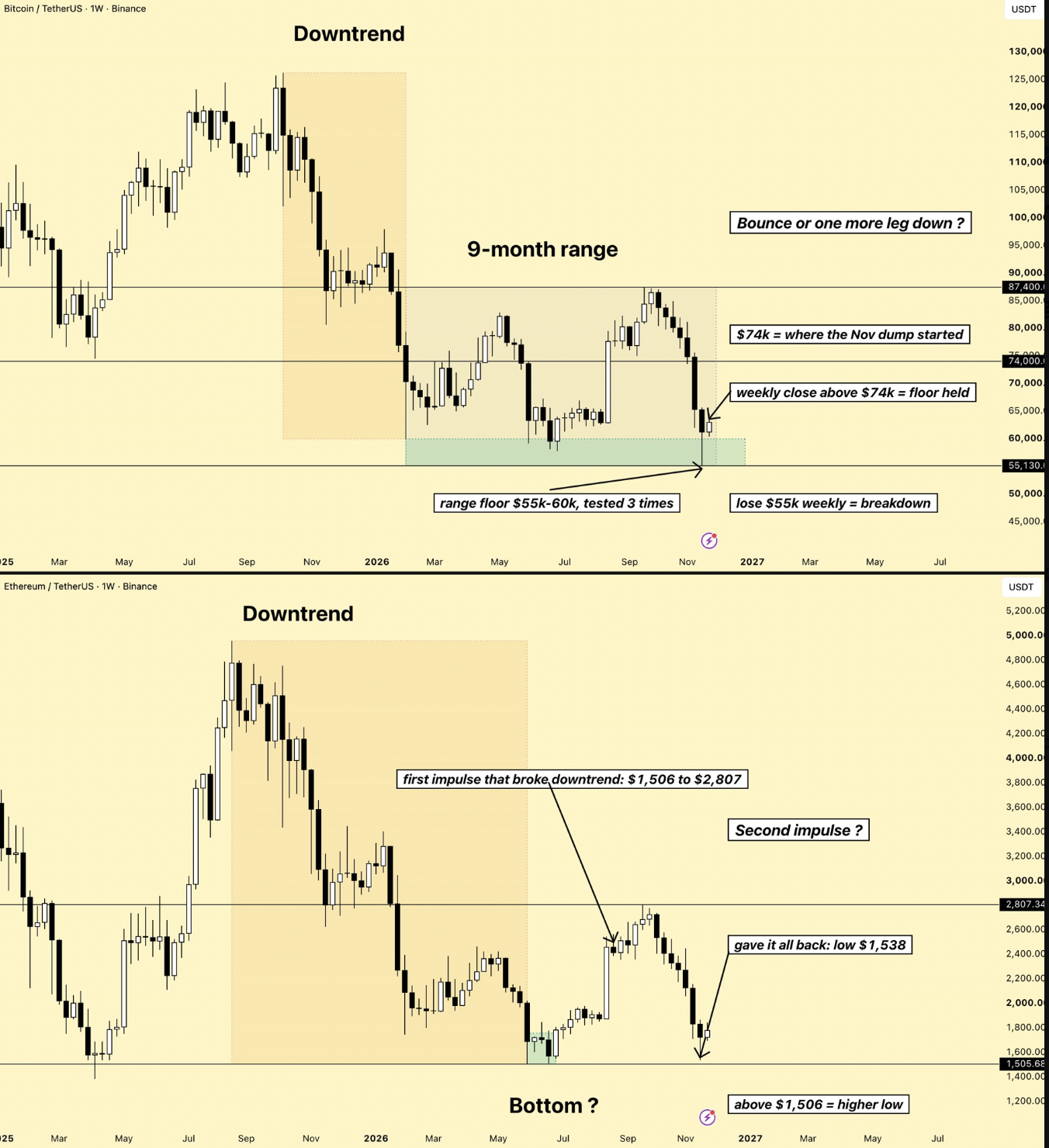
Another analyst noted that bitcoin had made a lower low within a nine-month trading range. Ether, meanwhile, had rallied about 86% from its June bottom and subsequently held above its previous low of $1,506. The analyst saw a possible higher low for ether, not an established uptrend.
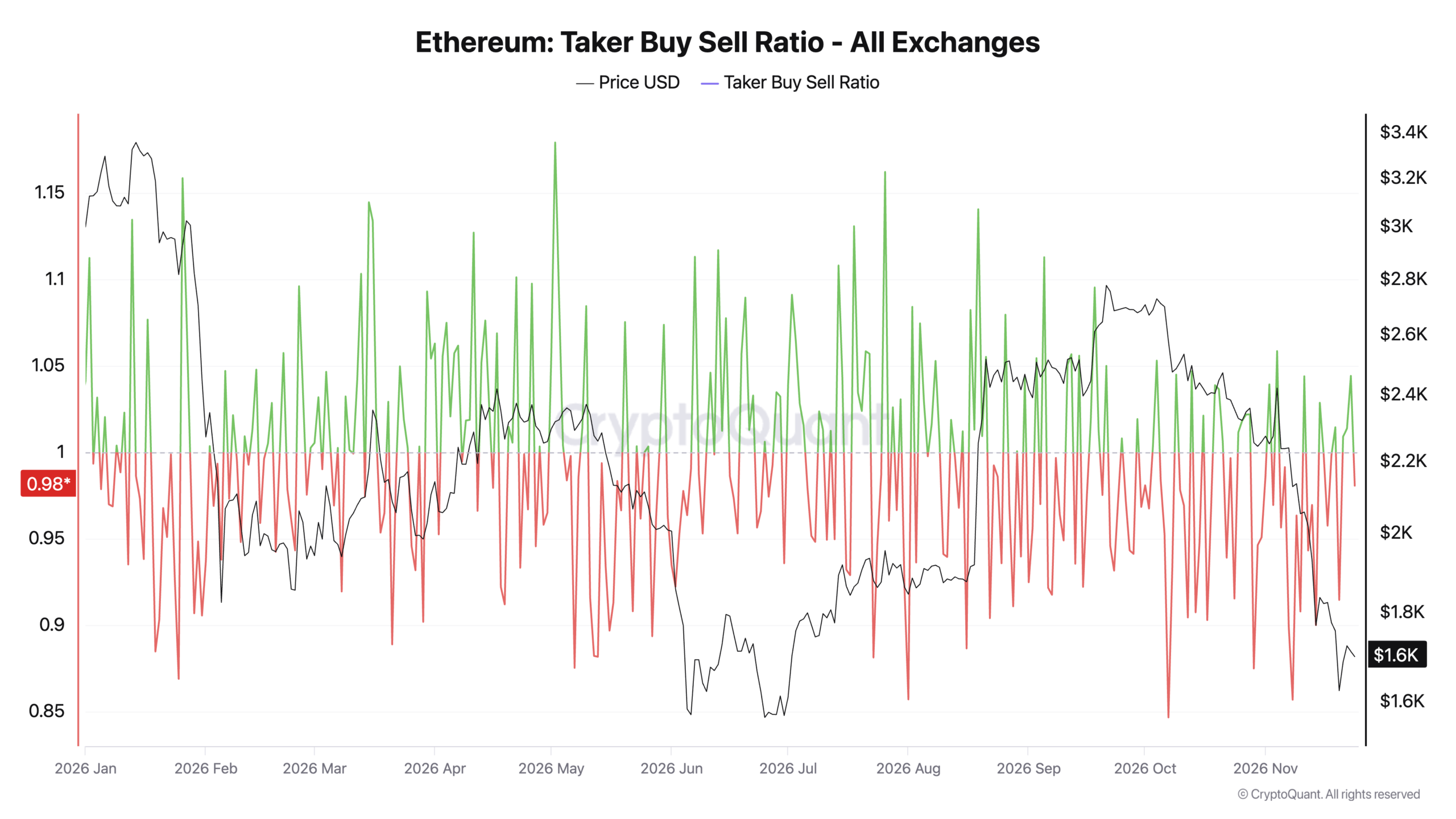
Exchange activity also qualified that picture. CryptoQuant’s ether taker buy/sell ratio stood at 0.98 at the time of reporting and had stayed below 1 for most of November. That meant sellers initiating trades had accounted for more volume than buyers initiating trades. Ether’s resilience against bitcoin was therefore distinct from a recovery in its dollar price.