More bitcoin was held at an unrealized loss than at a profit on a seven-day average basis, according to CryptoQuant data reported on Nov. 27, 2026, at 19:14:28 (UTC+08:00). The ratio of supply in profit to supply in loss fell to 0.825 on Nov. 26, its lowest reading since September 2015. A ratio of 1 means equal amounts of bitcoin are in profit and in loss.
The 30-day average, by contrast, remained above parity at 1.27. The shorter window gave more weight to the recent decline: bitcoin fell to $55,081 on Nov. 21, bringing its month-to-date loss to 28.8% at that point.
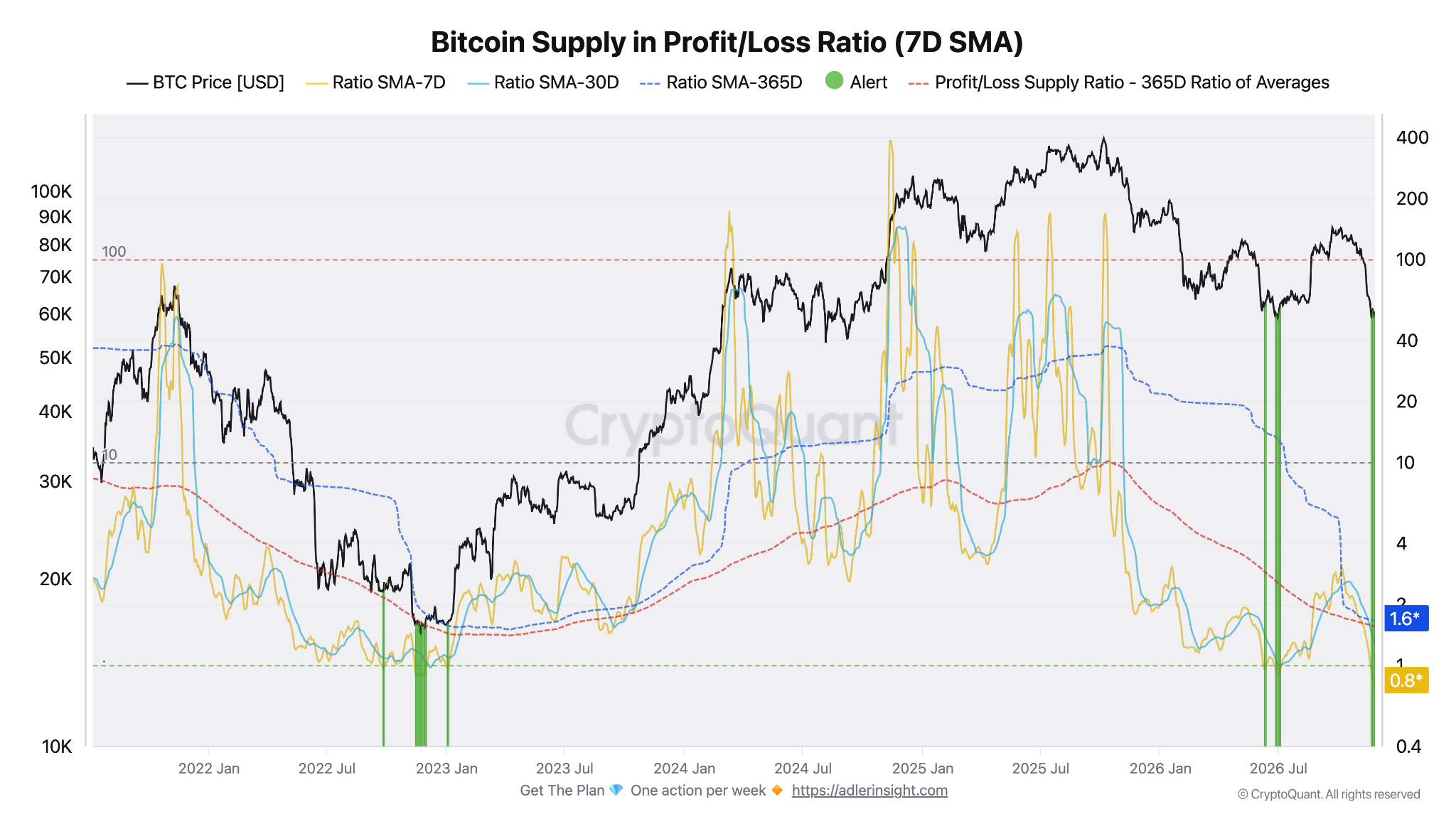
CryptoQuant contributor CryptoZeno noted that similar readings had appeared near major market bottoms, including in 2022. But the readings did not confirm a bottom: CryptoZeno said both averages would need to stabilize above 1 before the improvement could be considered durable.
What the sell-side risk ratio measures
CryptoQuant’s Bitcoin sell-side risk chart tracks a different measure: the sum of profits and losses realized when coins move onchain, divided by Bitcoin’s realized capitalization. Its 30-day moving average fell to 16.52, a level rarely seen outside bear-market bottoms. Unlike the supply ratio, which measures unrealized gains and losses, the sell-side measure treats movements of coins as potential selling pressure, not proof of a sale.
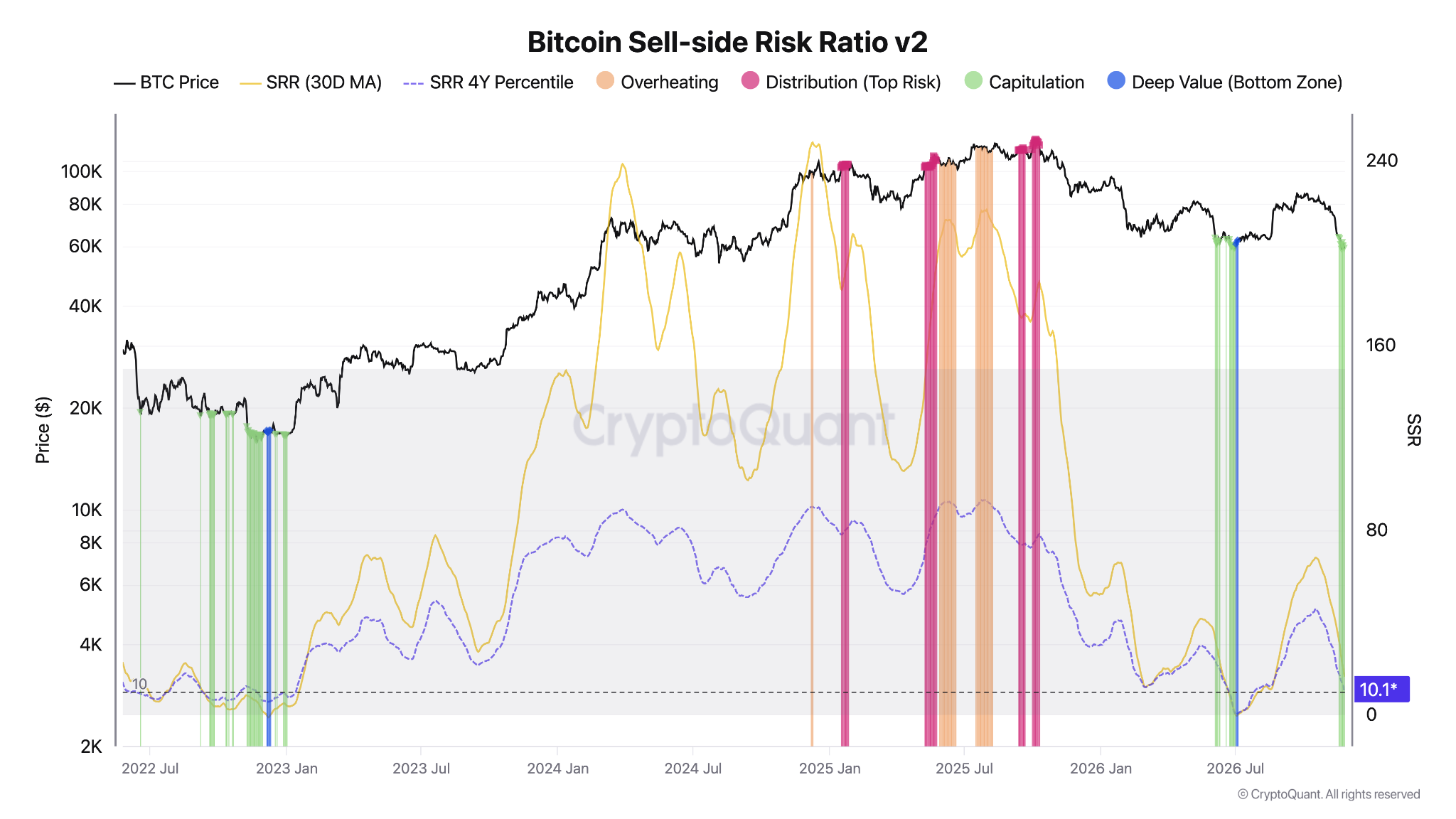
With bitcoin trading around $60,000 at the time of reporting, CryptoQuant’s analysis interpreted the low reading as a sign of possible seller exhaustion. It identified several periods of capitulation in 2026, the first since the end of the 2022 bear market.
Both short- and long-term holders had faced pressure on profitability. The realized price of the outstanding supply, based on the prices at which coins last moved onchain, stood near $53,200. Previous bear markets made that level a point of interest, not a forecast.