Historical report: This article reflects information published on November 16, 2026, at 10:18 a.m. China Standard Time. The prices, positions and expectations below belong to that reporting period.
Bitcoin and gold both faced pressure in the period covered by the report, but through different market channels. Bitcoin’s decline coincided with a retreat from leveraged futures positions; gold fell as U.S. real yields and the dollar rose. Their moves offer a comparison of conditions at the time—not evidence that the two assets reliably move together or provide the same protection against inflation.
Bitcoin: price, leverage and a corporate cost basis
The report said Bitcoin had closed below Strategy’s average purchase cost on every trading day since November 8. It put Strategy’s holdings at 850,364 BTC, acquired at an average cost of $75,456 each. At Friday’s close, Bitcoin was 9.47% below that average, implying an unrealized loss of approximately $6.07 billion on those holdings. A corporate holder’s cost basis is an accounting reference, not a floor under Bitcoin’s market price.
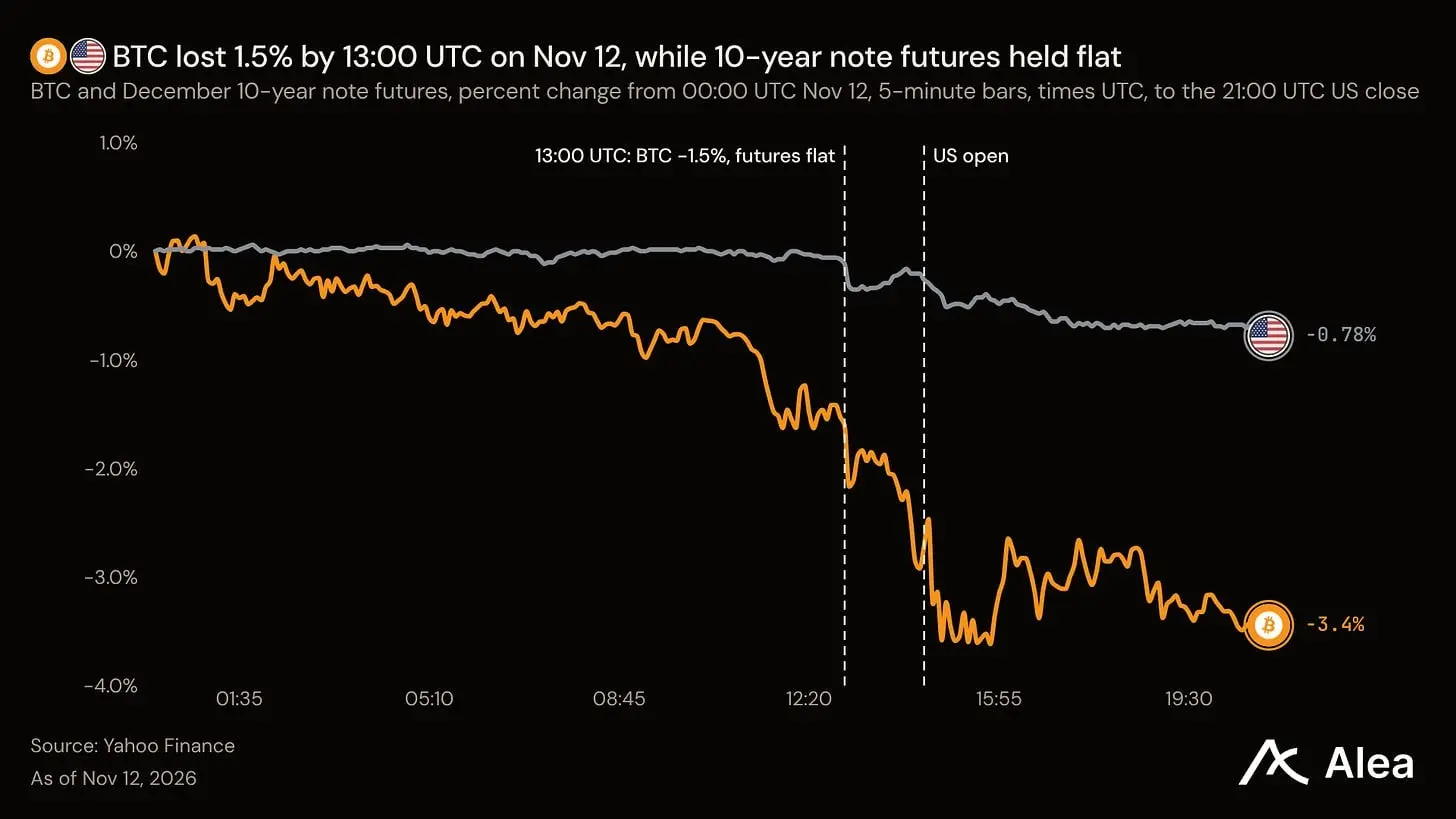
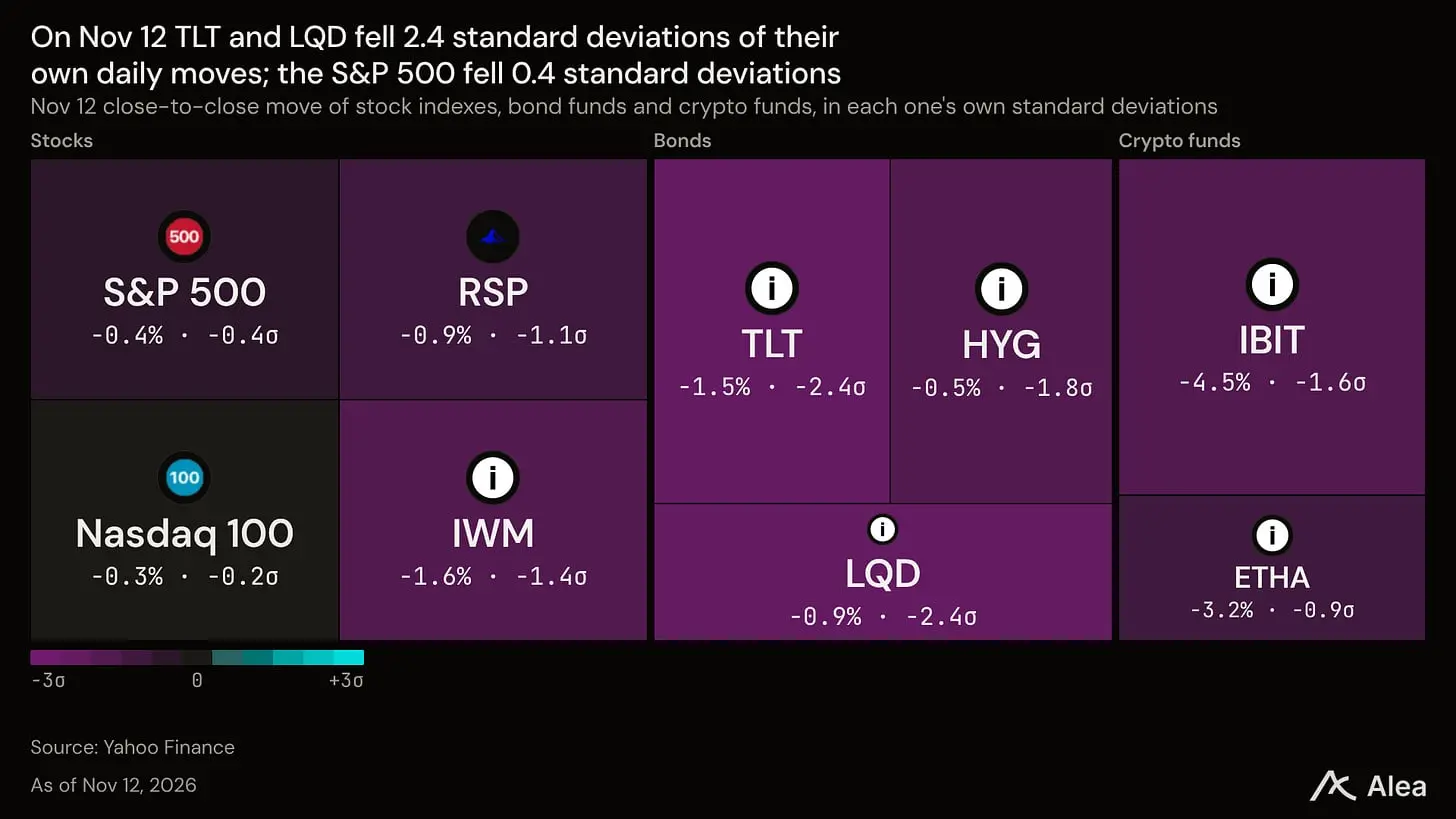
The decline also appeared in derivatives positioning. On November 12, Bitcoin had fallen 1.49% before 13:00 UTC while Treasury and Nasdaq futures were roughly flat, according to the report. Binance Bitcoin perpetual-futures open interest rose 4.3% during those hours, suggesting traders were adding positions as the price fell. Later, as Bitcoin dropped below $68,000, open interest across Binance, Bybit, OKX and Hyperliquid fell by about 4,060 BTC between 00:00 and 06:00 UTC on Friday. The report described this as leveraged capital exiting the market.
Inflation expectations and the gold comparison
The report placed those moves against expectations of tighter U.S. monetary policy. It said October’s core consumer price index rose 0.3% month over month. After the inflation release, the probability of unchanged December rates in a Polymarket contract fell from 18.5% before the release to below 2% two days later; the report gave Friday’s closing probability as 2.35%. These were traders’ contract prices, not an enacted Federal Reserve decision.
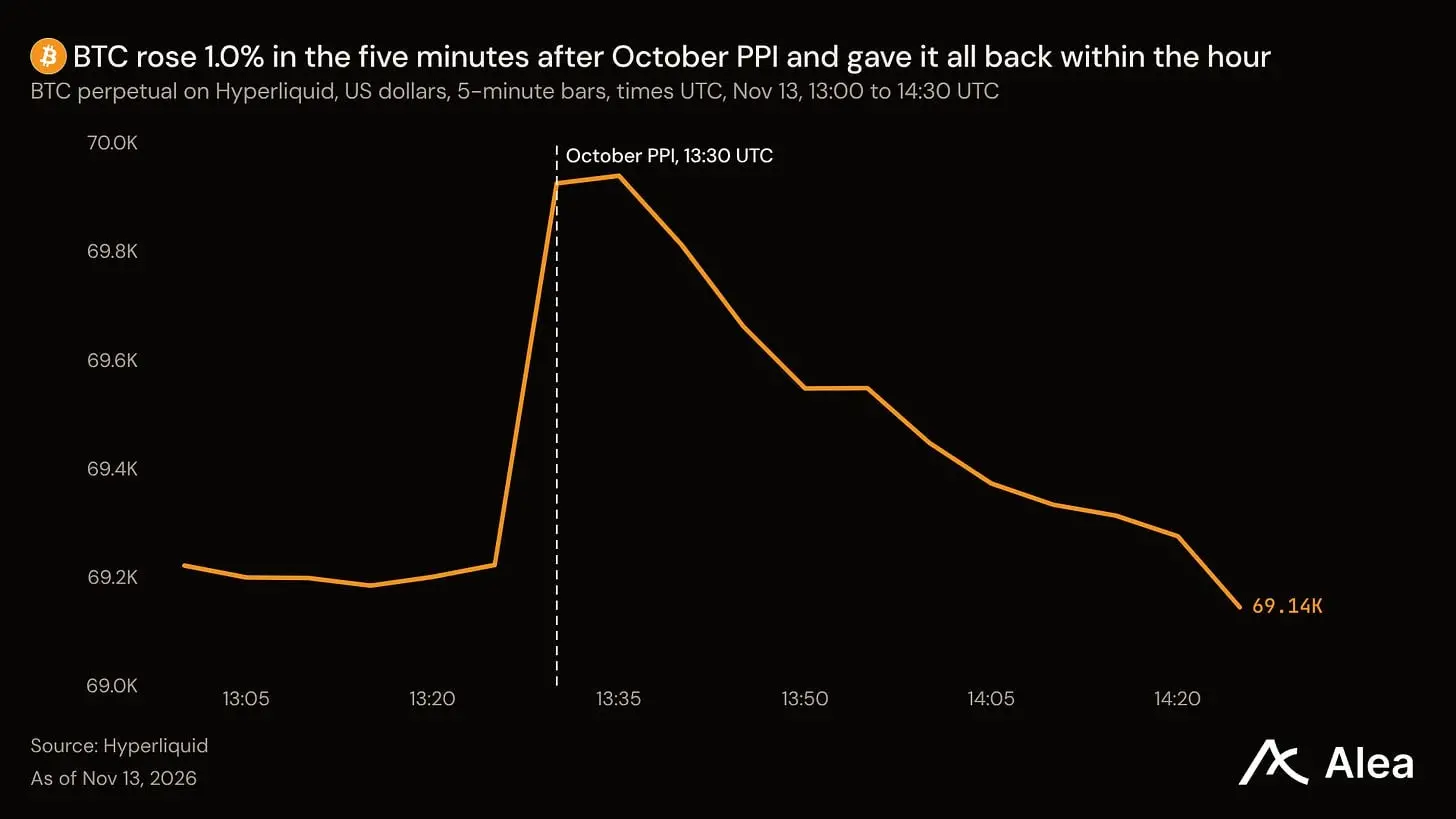
October’s producer price index rose 0.3% month over month, below economists’ 0.4% expectation. Bitcoin gained 1.0% in the five minutes after that release but gave up the gain within an hour, the report said.
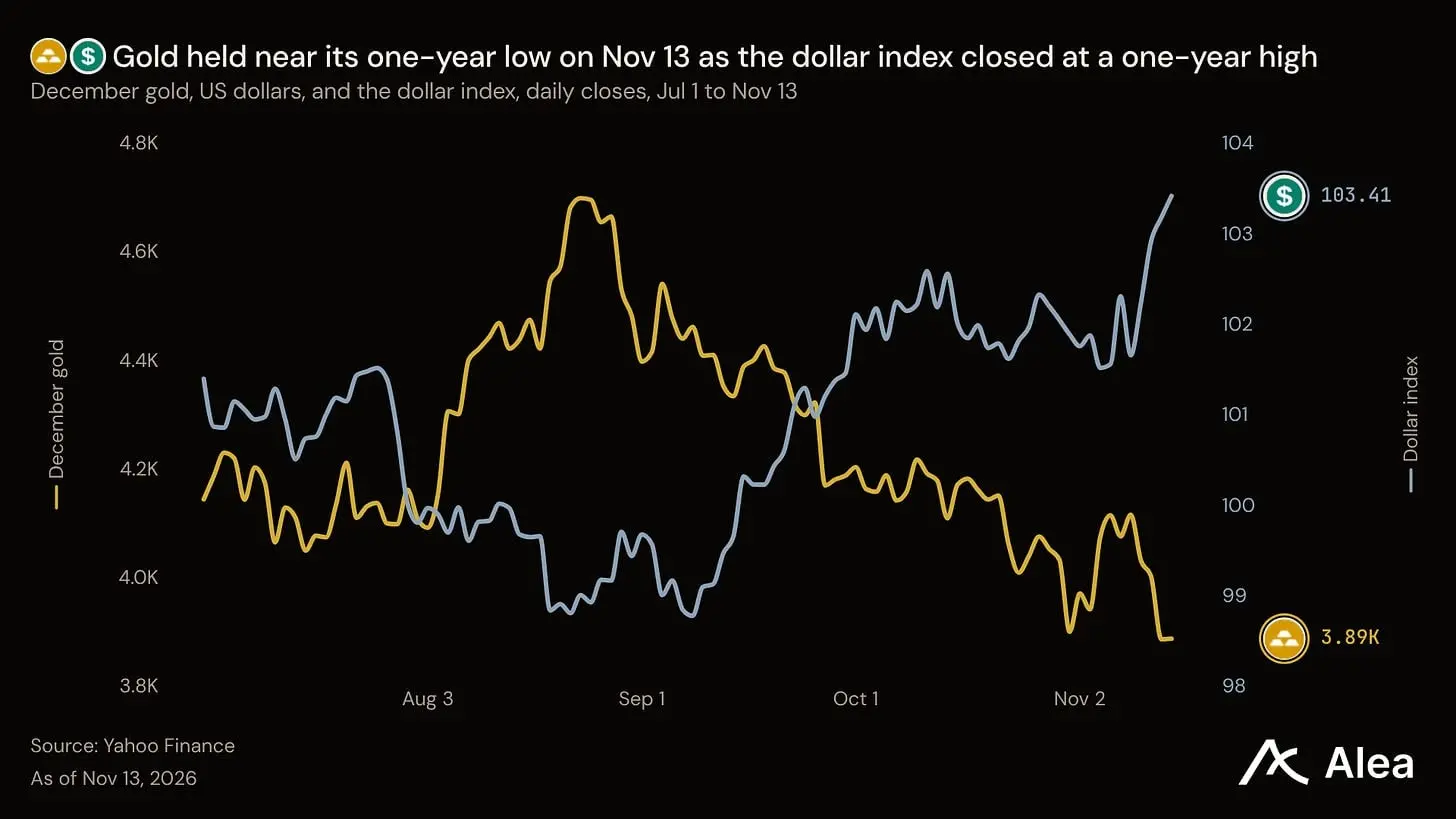
Gold did not act as a refuge in this interval either. December gold futures closed on November 12 at their lowest level in a year. The report said the U.S. 10-year real yield had risen 25 basis points since November 9 to 2.91% at Friday’s close, while the dollar index reached a one-year closing high. Higher real yields can make a non-yielding asset less attractive, but these observations alone do not establish how gold—or Bitcoin—will respond to future inflation.
Source: chaincatcher.com (originally published 2026-11-16 10:18 UTC+8)