In reporting published on November 17, 2026, Grayscale research head Zach Pandl said crypto valuations had fallen sharply during the first two weeks of November, while arguing that digital-asset fundamentals remained sound. Grayscale said the lower prices might offer an attractive entry point for medium- to long-term investors—an assessment, not a measured guarantee of future returns.
According to the report, Bitcoin had fallen about 17% since the start of November, to roughly $64,000. Grayscale’s market-cap-weighted Crypto Sectors index had declined about 18%. Among the 20 largest crypto assets by market value, BTC and SOL had the weakest volatility-adjusted performance.
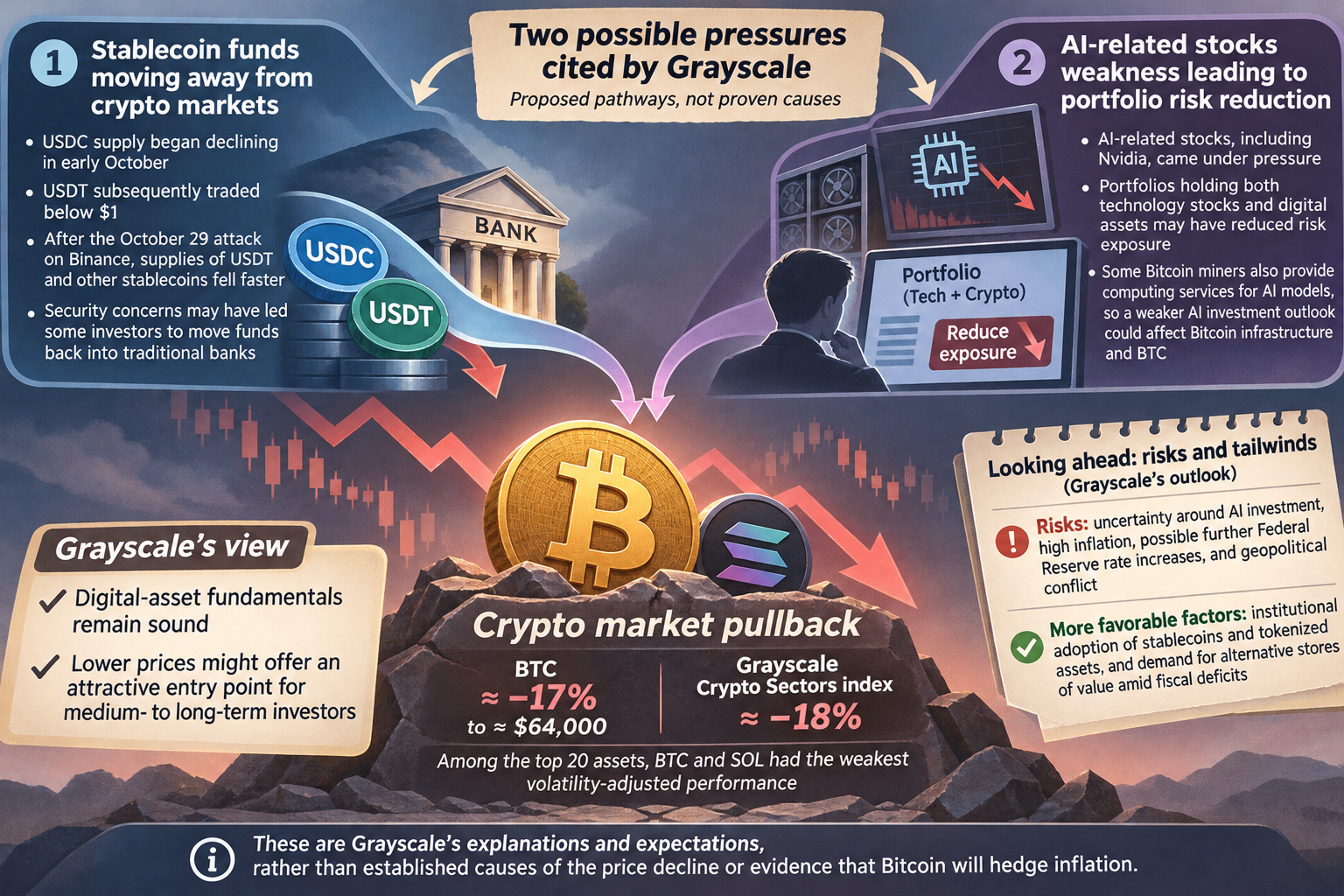
Grayscale pointed to two possible pressures. It said USDC supply began declining in early October and USDT subsequently traded below $1. The report said supplies of USDT and other stablecoins fell faster after what it described as an October 29 attack on Binance. Grayscale suggested that security concerns may have led some investors to move funds back into traditional banks. It also said weakness in AI-related stocks, including Nvidia, could have prompted portfolios holding both technology stocks and digital assets to reduce risk. Some Bitcoin miners also provide computing services for AI models, the report noted.
Grayscale said the decline had little to do with Anthropic’s planned IPO or pressure on digital-asset treasury company Strategy; it noted that Strategy’s floating-rate preferred stock, STRC, was still trading near par. Looking ahead, the firm cited uncertainty around AI investment, high inflation, possible further Federal Reserve rate increases and geopolitical conflict as risks. Its more favorable outlook rested partly on institutional adoption of stablecoins and tokenized assets and on demand for alternative stores of value amid fiscal deficits. Those are Grayscale’s explanations and expectations, rather than established causes of the price decline or evidence that Bitcoin will hedge inflation.