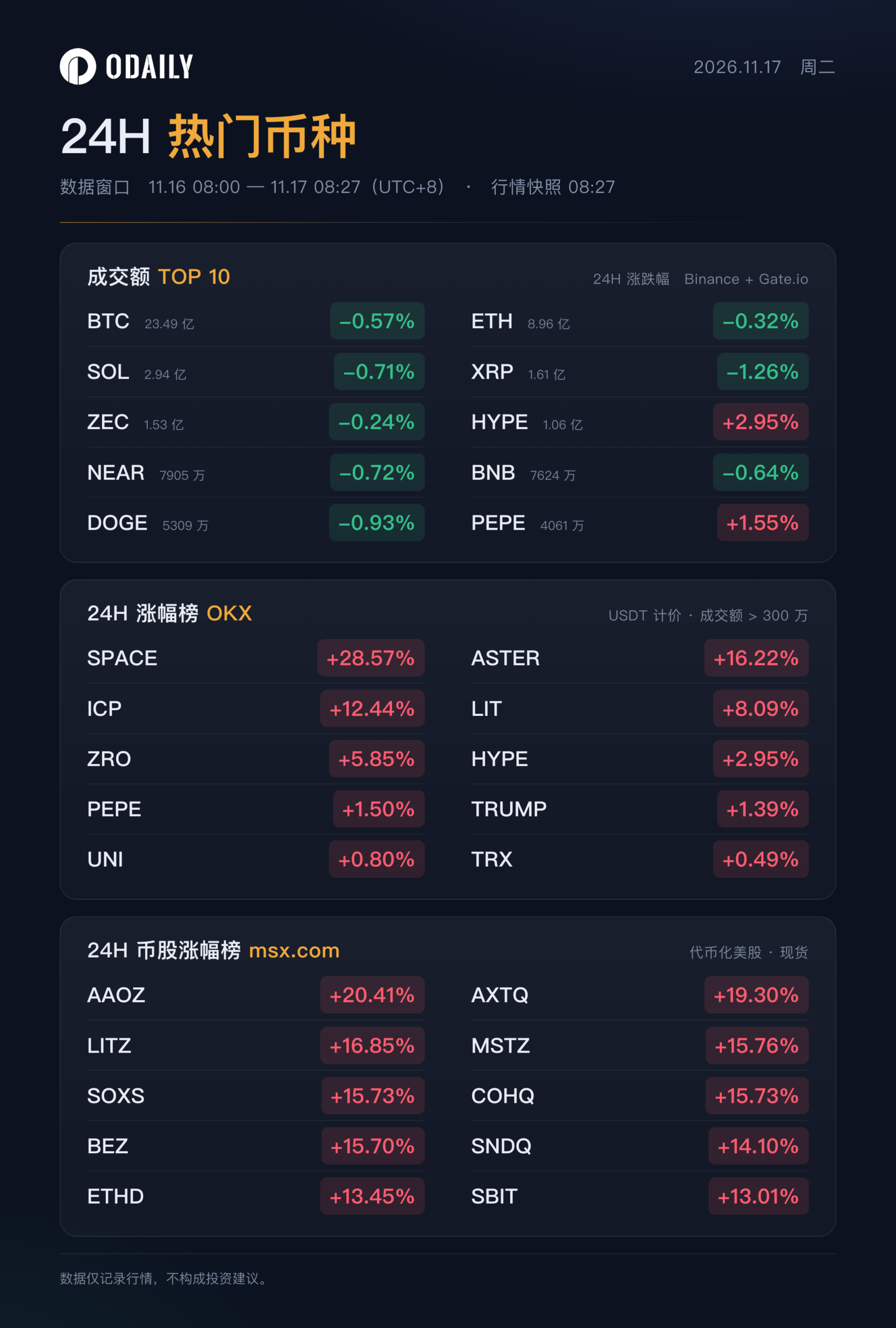
As of the original report on November 17, 2026, Bitcoin was trading around $62,000. The report’s exchange-market snapshot showed BTC down 0.57% over 24 hours. Its broader market picture was less about one price move than about the possible interaction of spot selling, limited liquidity and leveraged positions.
What may have driven the decline
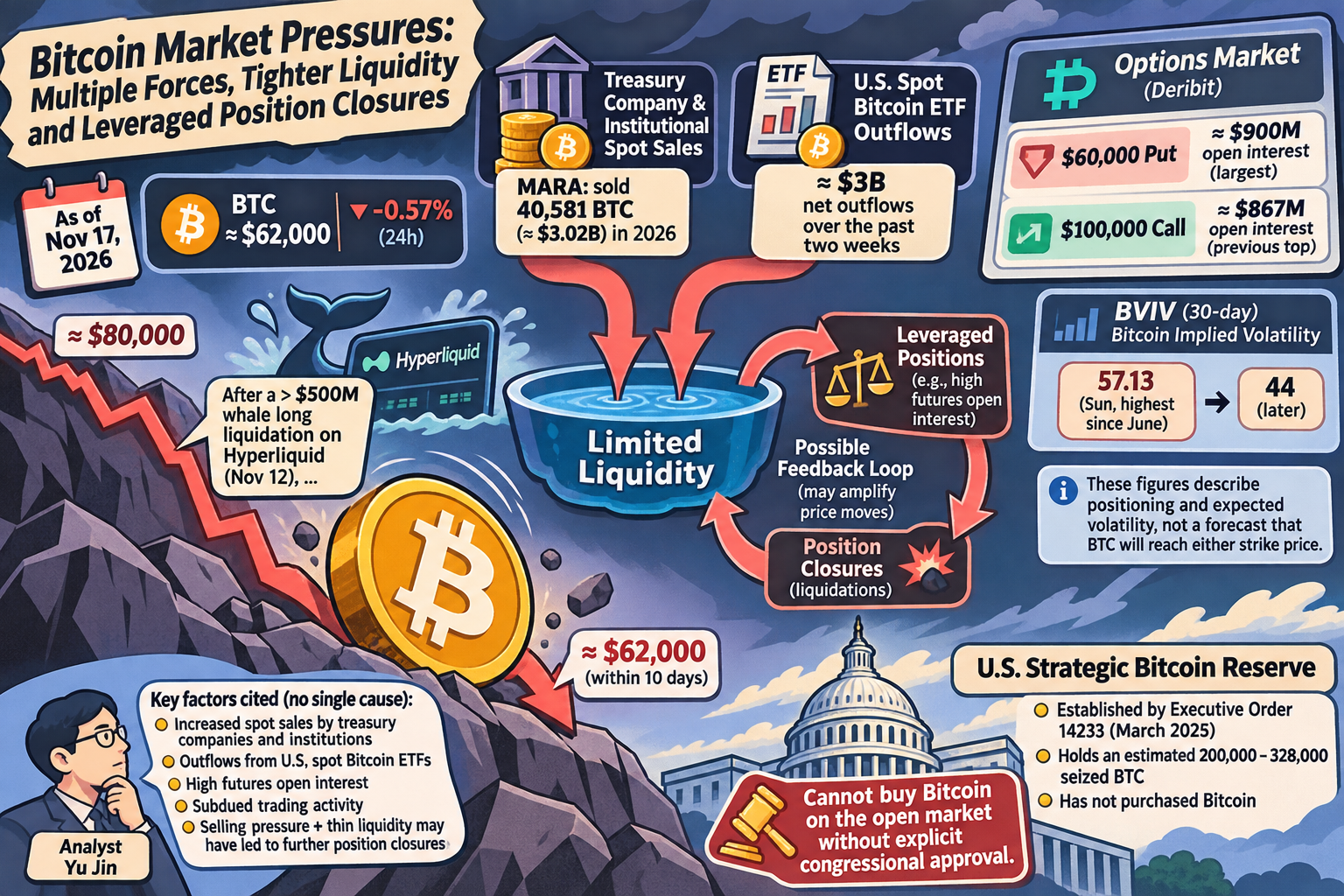
On-chain analyst Yu Jin argued that no single adverse event explained the sell-off. He pointed to increased spot sales by treasury companies and institutions, outflows from U.S. spot Bitcoin ETFs, high futures open interest and subdued trading activity. According to his figures, MARA had sold 40,581 BTC worth about $3.02 billion so far in 2026, while spot Bitcoin ETFs had recorded roughly $3 billion in net outflows over the preceding two weeks.
Yu Jin said the decline accelerated after the November 12 liquidation of a whale’s long position worth more than $500 million on Hyperliquid. He described BTC as falling from $80,000 to $62,000 over ten days. His account links selling pressure and thin liquidity to further position closures; it is an analyst’s explanation, not proof that any one participant determined the price.
Options traders’ changing exposure
On Deribit, the $60,000 put had become the Bitcoin option with the largest open interest by notional value, at about $900 million, according to the report’s citation of CoinDesk. That was slightly above the approximately $867 million in open interest for the $100,000 call, which had previously held the top position. The 30-day Bitcoin implied-volatility index, BVIV, briefly reached 57.13 on the preceding Sunday—its highest level since June—before falling to 44. These figures describe positioning and expected volatility, not a forecast that Bitcoin will reach either strike price.

A constraint on U.S. reserve purchases
Separately, Bitcoin News relayed former White House crypto adviser Patrick Witt’s statement that the U.S. Strategic Bitcoin Reserve could not buy Bitcoin on the open market without explicit congressional approval. The report said the reserve was established by Executive Order 14233 in March 2025, held an estimated 200,000 to 328,000 seized BTC and had not purchased Bitcoin. The estimate concerns holdings, not a newly approved purchase. In this account, congressional action would be required before open-market buying could occur.