A TechFlow report published on November 19, 2026, contrasted third-quarter institutional holdings with subsequent flows through U.S. spot Bitcoin exchange-traded funds. The distinction matters: a quarterly holdings disclosure shows a position at a reporting date, not whether its owner continued to hold it weeks later.
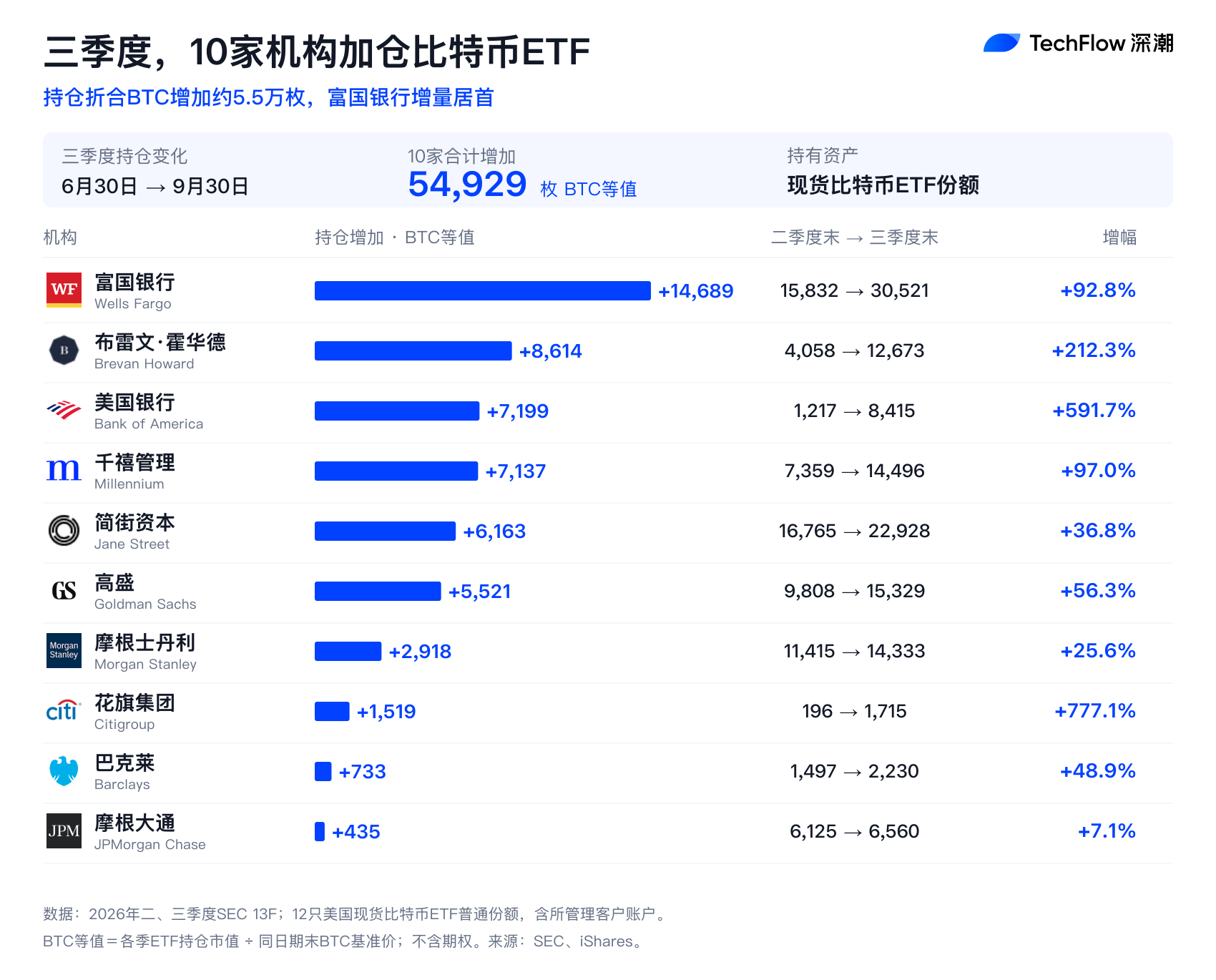
The report said ten institutions increased their spot Bitcoin ETF holdings by the equivalent of 54,929 BTC during Q3, bringing their combined positions to about 117,000 BTC equivalent. That total has an unresolved discrepancy: a holdings chart accompanying the report lists ten quarter-end positions that sum to 129,200 BTC equivalent. The supplied material does not reconcile the two figures.
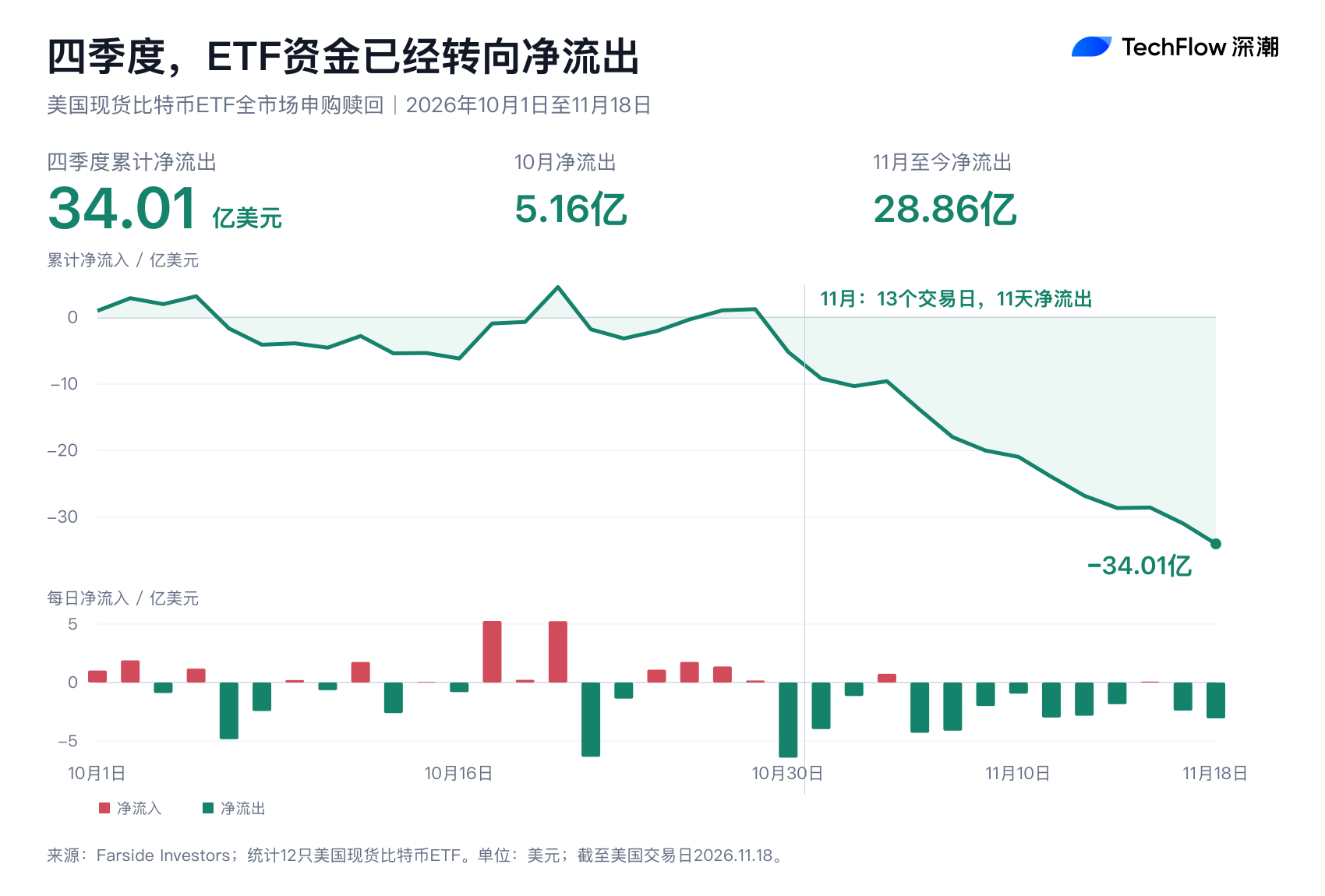
Citing Farside data, TechFlow reported that the 12 U.S. spot Bitcoin ETFs recorded a combined $3.401 billion in net outflows from October 1 through November 18. It said November accounted for $2.886 billion in net outflows, with outflows on 11 of the 13 trading days covered by its report. Those are fund-wide flows, not evidence that the ten institutions sold the positions disclosed in their Q3 filings.
TechFlow argued that some ETF holdings may reflect wealth-management allocations or hedge-fund trades rather than a commitment to hold Bitcoin through a downturn. It described a strategy that pairs a long spot ETF position with a short Bitcoin futures position. The report did not establish how much of the disclosed holdings followed either strategy, or which investors drove the later outflows.
The episode illustrates a limit of using institutional ownership as a store-of-value signal. An ETF can make Bitcoin easier to hold in a conventional portfolio—and easier to sell when that portfolio’s needs change. The reported filings and flows show those two possibilities at different points in time; they do not, by themselves, explain the price decline.